Inward-opening side-hung casement, made to measure
A side-hung casement opens only one way — it turns inward on its hinges — and that is exactly why it costs less than a tilt and turn window.
Standard size 1,000 × 1,400 mm
Configure this inward-opening casement windowHow much does a inward-opening casement window cost?
What comparable projects cost, by material
typically £320 to £448 per unit, excl. UK VAT and import duties The spread is too wide for a single amount; this is the range they fell within. measured on 94 quotes from our own archive
Configure in uPVCtypically £526 to £780 per unit, excl. UK VAT and import duties The spread is too wide for a single amount; this is the range they fell within. measured on 38 quotes from our own archive
Configure in aluminiumThis is a guide price, not a quote and not a final price. The amount for your own sizes is in the made-to-measure quote, which you request through the configurator.
What you need to know about a inward-opening casement window
| Standard size of this layout | 1,000 × 1,400 mm |
|---|---|
| Sections in this layout | Side-hung (inward opening) |
| Profiles | 21 profiles, each with its own page |
| Material | uPVC · Aluminium |
| Delivery quoted with your offer | supplied, not installed |
A tilt and turn window has two positions: tilt (a gap at the top, secure enough to leave open overnight) and turn (fully open, also for cleaning). An inward-opening side-hung casement has only the second. That means less hardware and so a lower price, and the window stays just as easy to clean from inside. What you give up is the tilt position: there is no way to set the window to a small gap without it also being able to swing fully open.
The standard size is 1,000 × 1,400 mm, hinged on the left; in the configurator you set the size yourself, and you tell us the hinge side with your quote request. Choose a side-hung casement for a room where you rarely tilt and do value the full airflow when it's open — a store room, a garage, or a window nobody leaves on a night-time gap.
A second reason to choose a side-hung casement is maintenance: less hardware means fewer hinge points that can drop or squeak after years of use, and one position instead of two that never needs adjusting. In a store room or shed where nobody comes to the window every day, that counts for more than the convenience of tilting — maintenance you don't do is maintenance that shouldn't be needed.
Compared with the rest of the group, a side-hung casement is the only pane that does open fully but has no tilt position — the single tilt and turn window has both, in the same kind of size. Tilt and turn vs casement: if you're torn between the two, look at how you ventilate. If you leave a window on a gap when you go out, the tilt position is exactly what it is there for and a tilt and turn window is the better choice. If it's always full airflow or nothing, the extra hardware of a tilt and turn window is a cost you won't use.
As with every other pane in our layouts, you order a side-hung casement to the overall size of the frame, not to the opening of a subframe. What counts extra with a side-hung casement is the swing of the sash: don't just measure the opening itself but also the space in front of it, up to the full width of the sash plus a margin. A window that fits the frame but can't open without hitting a wall or a piece of furniture is a window you leave shut in practice.
Maintenance on a side-hung casement is limited to one set of hinges and one lock, instead of the two moving positions of a tilt and turn window: less mechanism means fewer places that can drop, squeak or stiffen after years of use. In a store room, garage or shed where you rarely walk past to check the hardware, that counts. Colour and finish follow the same route as any other window: any RAL colour on aluminium, a foil or through-colour from the chart on uPVC, and a different colour inside and out if you want. For a window in a room you rarely go into, such as a store room or garage, many people deliberately choose a quiet through-colour — not because the window gets less sun, but because a striking colour gives you less there than in a room where you see it every day.
In a renovation where the existing hardware is worn out, a side-hung casement often replaces an old window that had no tilt position anyway — you're not taking away a function, only the age of the hardware. In a new build, people sometimes choose one deliberately for a room where a window needs to be able to open but day-to-day ventilation already happens another way, such as mechanical ventilation: then you're not paying for a tilt position you'd never use.
For break-in resistance, the missing tilt position makes no difference: the hardware sets the level of resistance, not the number of positions the window has. If in doubt, ask about a version with a stronger locking cylinder, just as with a tilt and turn window.
Weight does play a part in the choice of glass: the heavier the glass, the more the sash weighs on its hinges, and that limits how far you can combine triple glazing with a large size. If you're torn between wide and heavy glass, the configurator shows what the chosen profile allows.
Still not sure? Use the comparison with the other layouts in this group above to see which arrangement suits your situation best.
From measuring to delivery in four steps
- 1
Configure
Choose type, profile, size, glass and colour in the configurator. You see your window in the drawing straight away.
- 2
Quote within 3 working days
We ask the manufacturer for the price and send you a quote for your sizes.
- 3
Accept
Once you accept, your window goes into production. You pay after accepting, by invoice.
- 4
Delivery
Delivery to the UK is quoted with your offer. You fit it yourself or with your own installer.
Inward-opening casement window in 21 profiles
Each profile has its own page with the specifications, the colours and the maximum sizes. Choose it there and the profile is already selected in the configurator.
Know what you want? Put it together.
No form first: you watch your window take shape as you choose. The price follows in the quote, within three working days.
Other configurations in this group
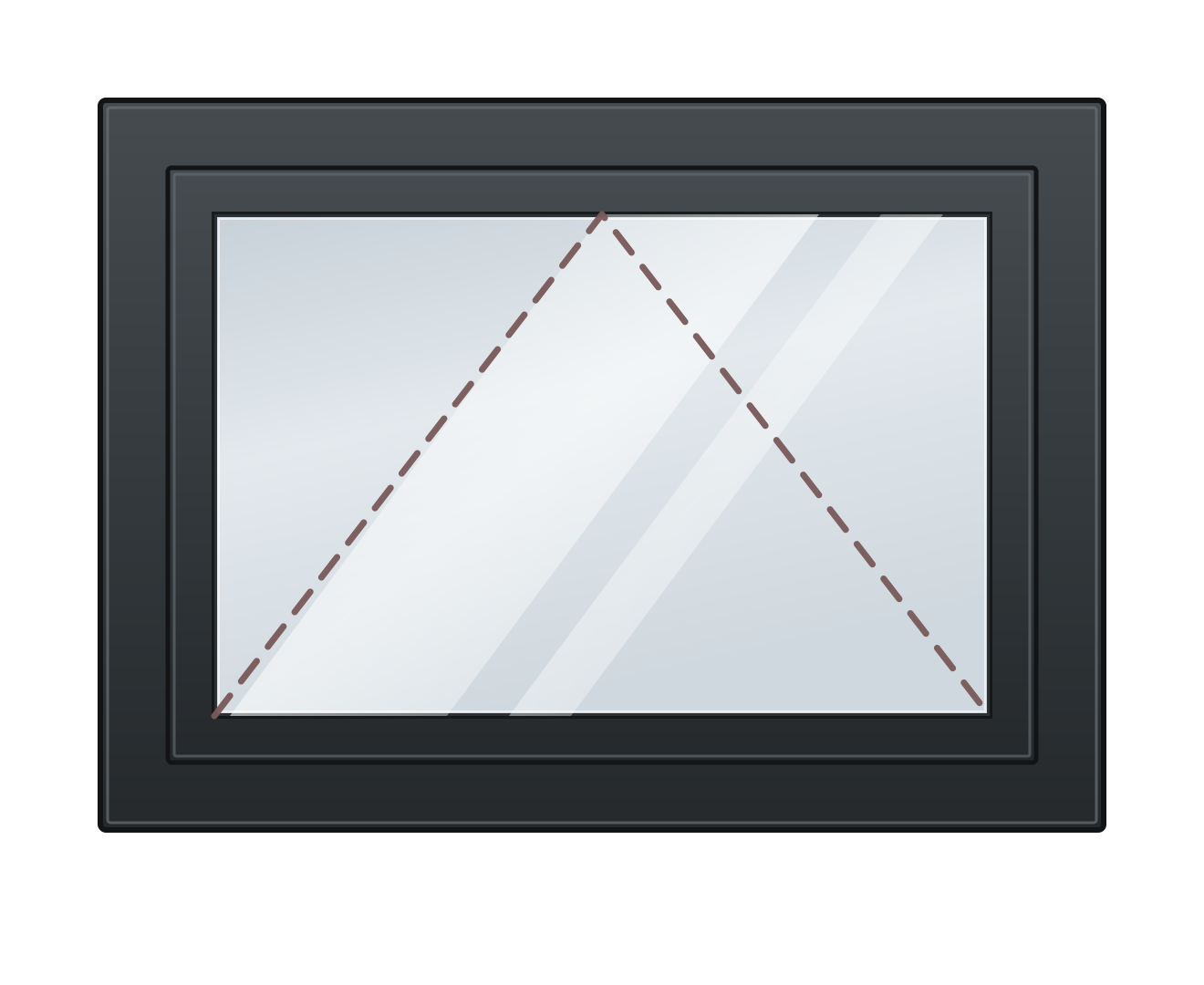
Hinged at the bottom, tilts inward — ventilation in a spot you don't reach with a handle.
Request my quote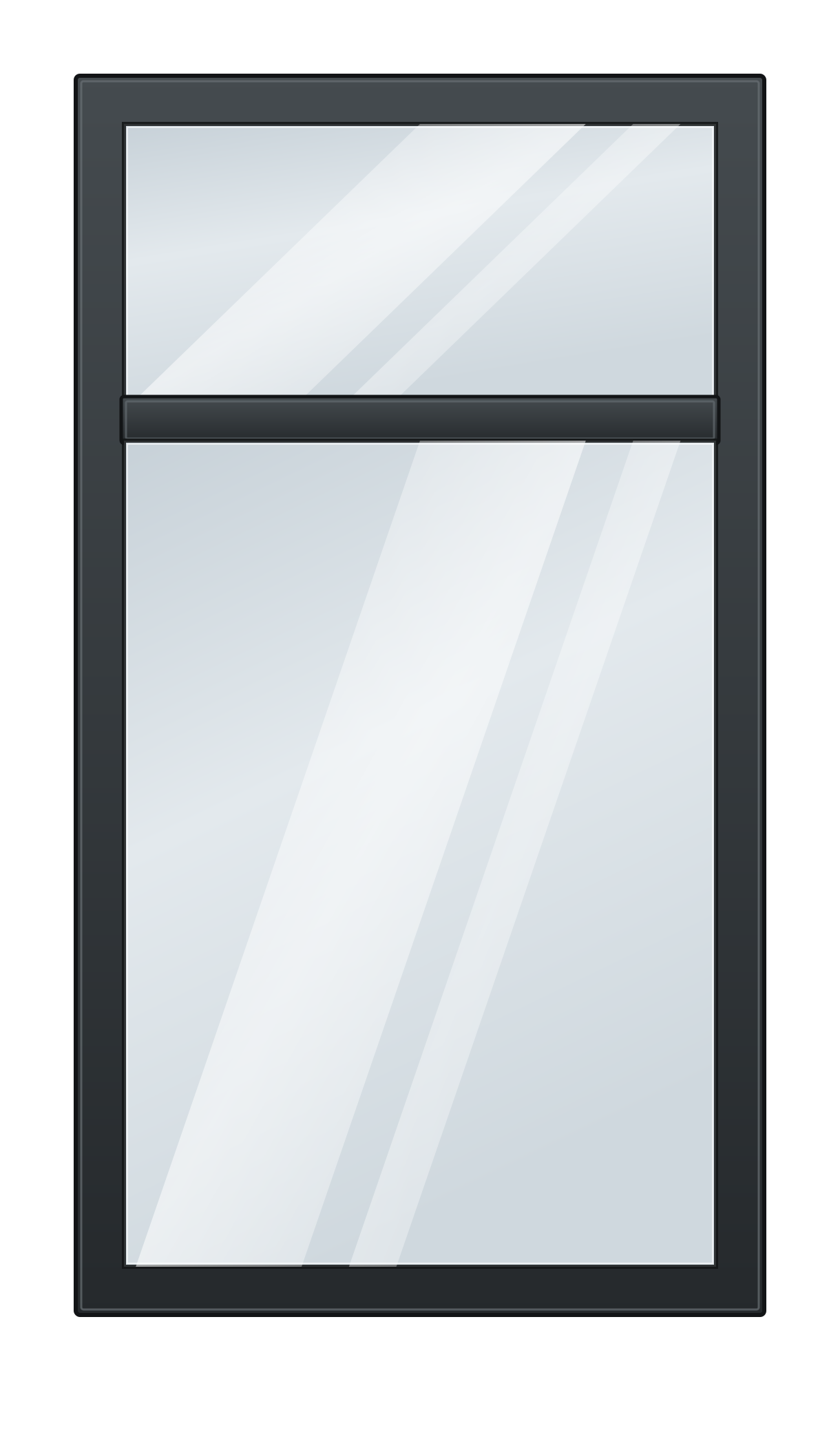
Two fixed panes one above the other — light in a narrow, tall strip, with no opening.
Request my quote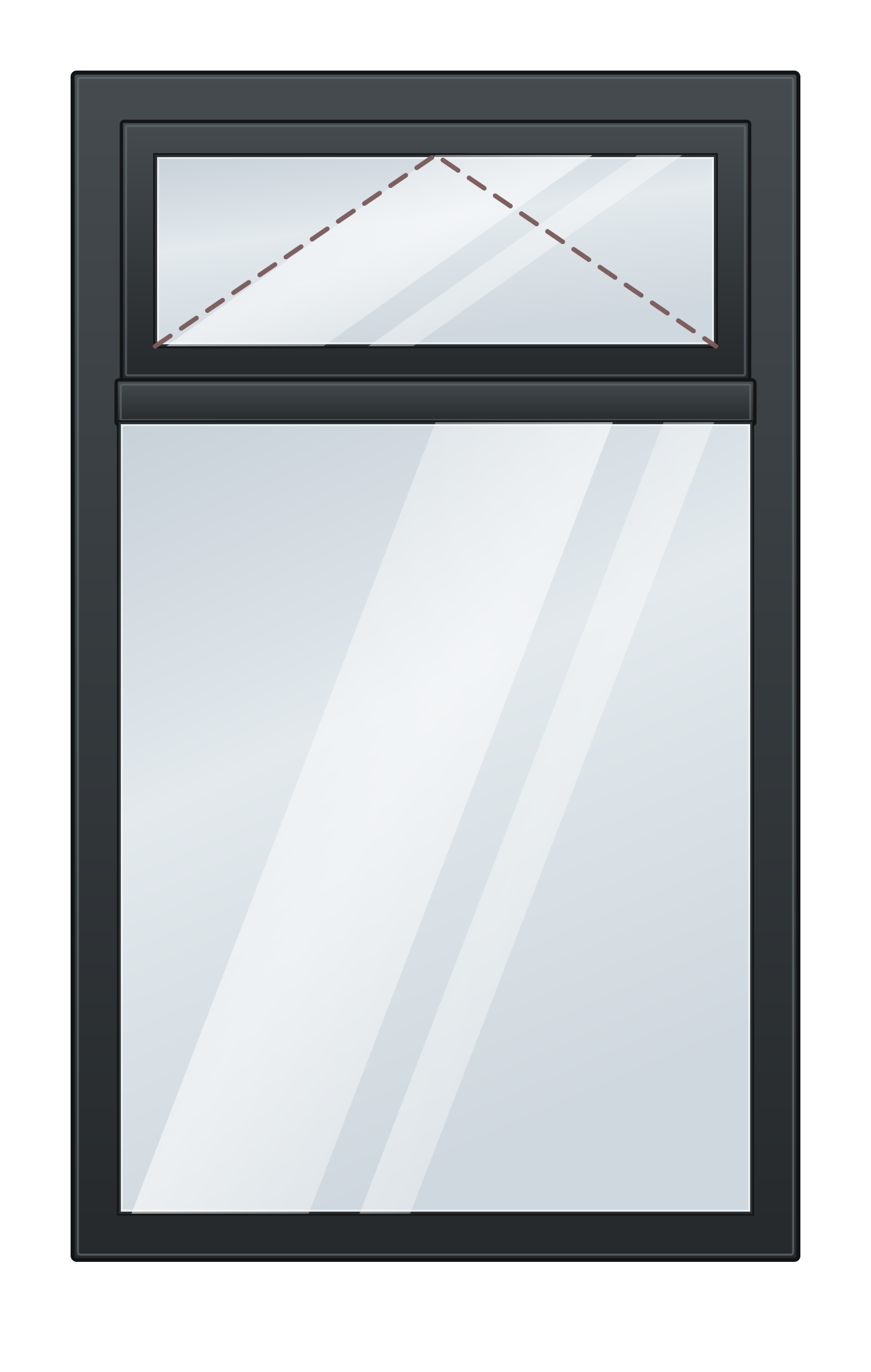
Tilt-in sash above for air up high, fixed glass below for a large, still pane.
Request my quote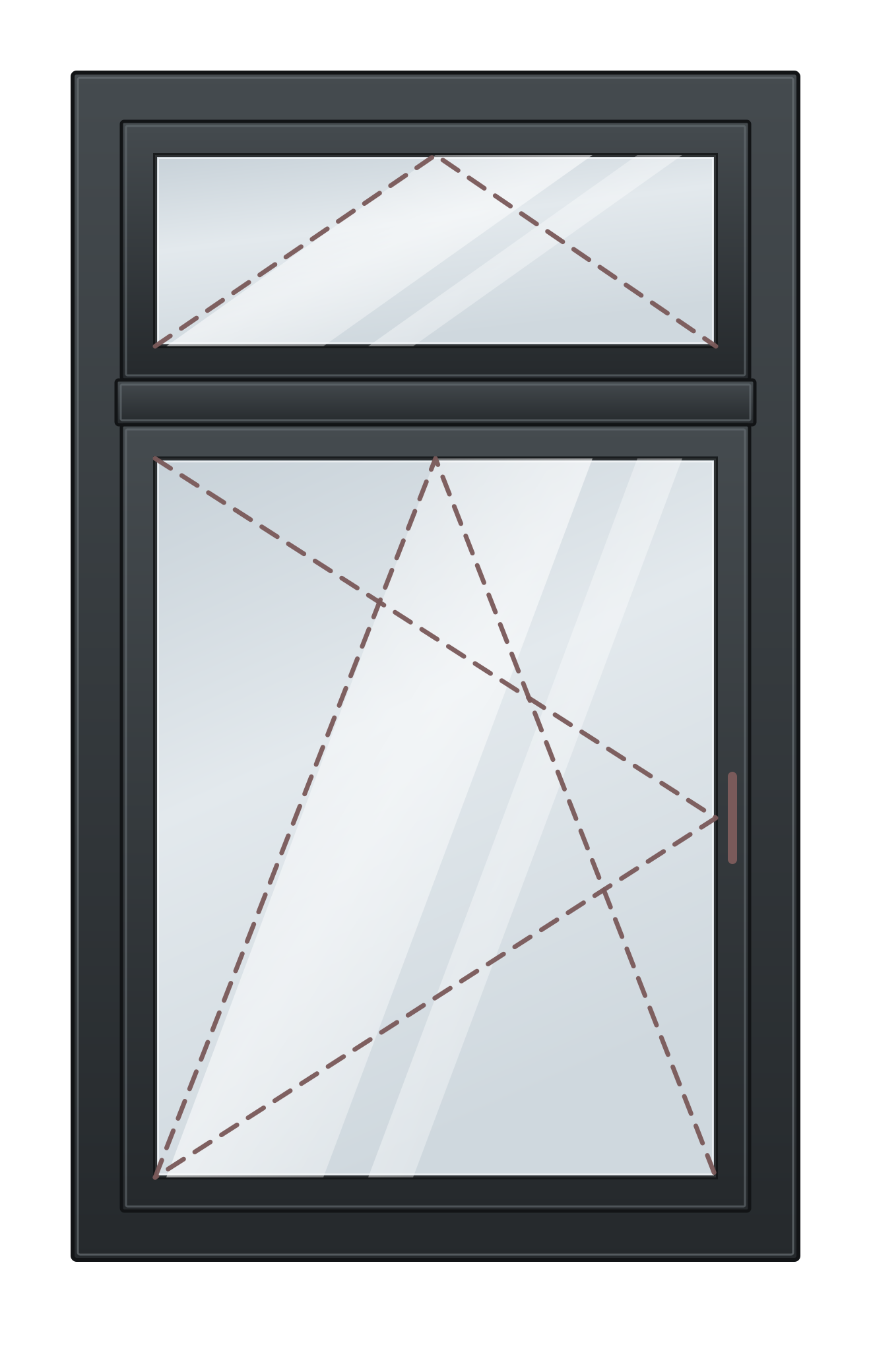
Tilt-in sash above, tilt and turn below — the most complete ventilation in a narrow space.
Request my quote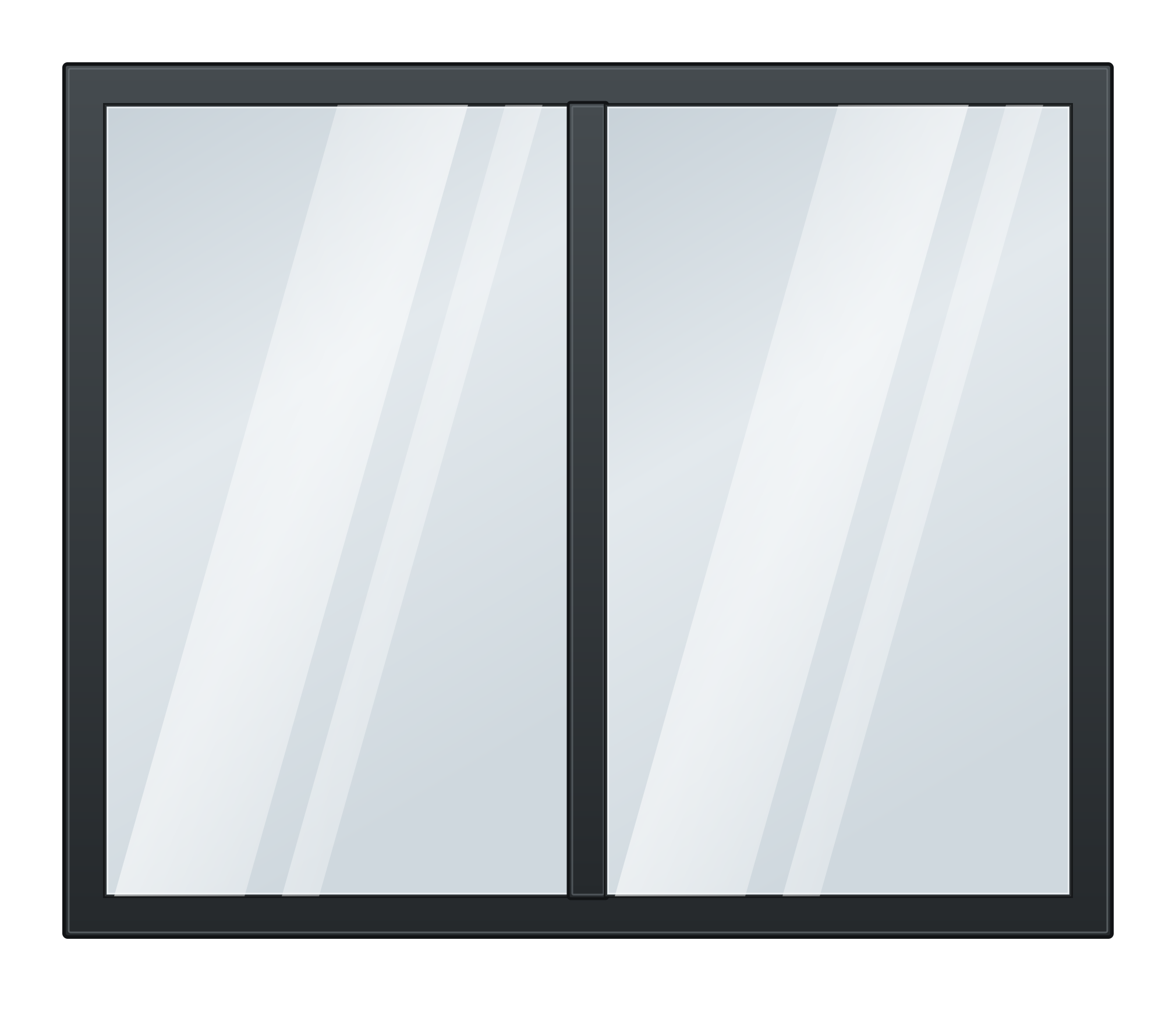
Two fixed panes side by side — wide light and a clear view, with no opening.
Request my quote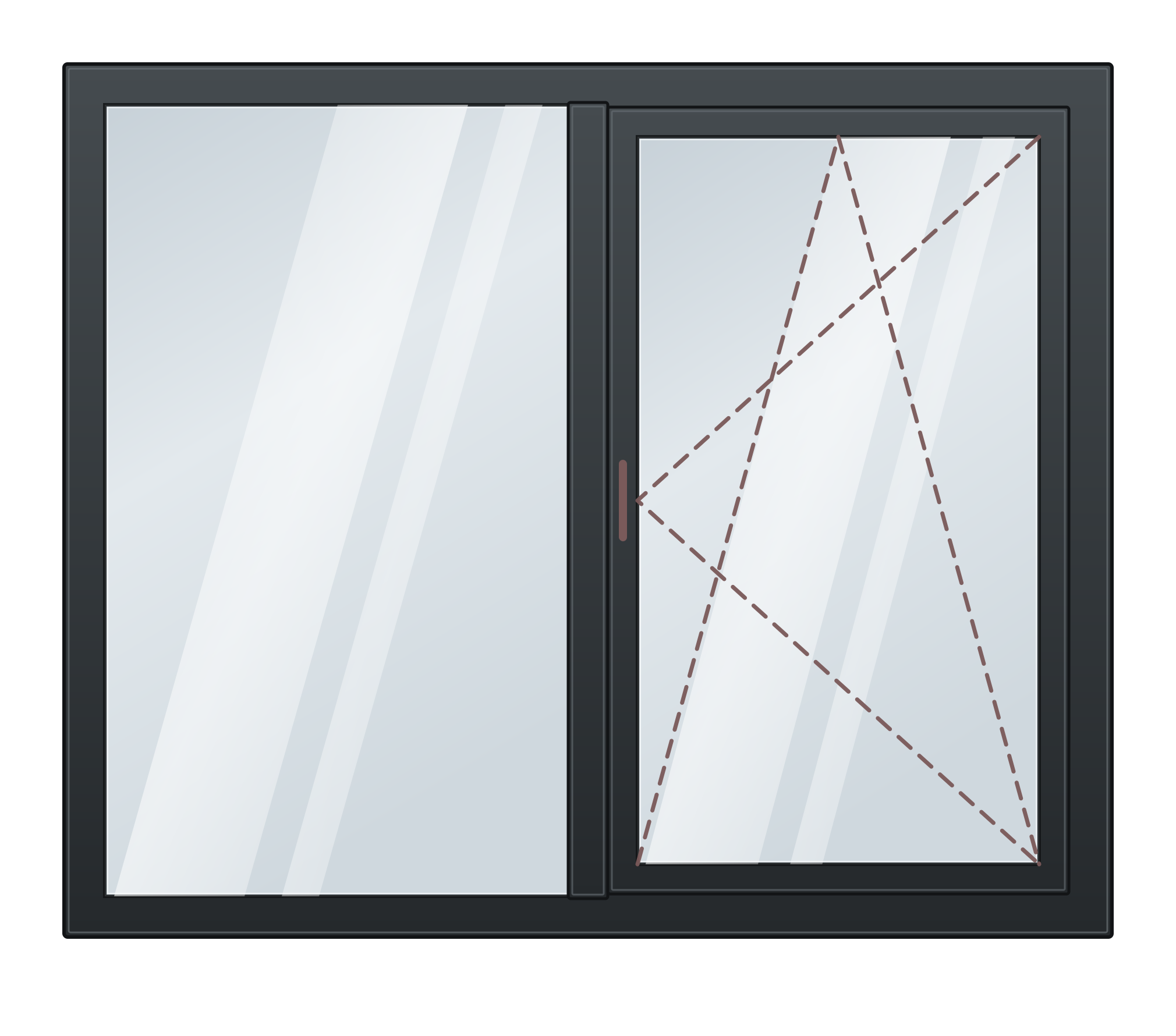
Fixed pane for the view, tilt and turn sash beside it for air — the classic split.
Request my quoteFrequently asked questions about a inward-opening casement window
Can I make a side-hung casement tilt later?
No, that needs different hardware that isn't in this pane. If you want to keep the tilt position open as an option, choose a tilt and turn window straight away.
Tilt and turn vs casement: why choose a side-hung casement?
Mainly price: less hardware means lower cost in the same size. It only really makes a difference if you'd never use the tilt position anyway.
Is a side-hung casement as secure as a tilt and turn window?
The lock and the hardware are independent of the positions the window has; a side-hung casement is not inherently less secure. What does count: a window on tilt on a warm night is a smaller gap than a casement you accidentally haven't closed properly, and that difference is in how you use it, not in the profile.
Can the hinges be on the right?
Yes, in the configurator you choose left or right yourself. Think about what stands in front of the window in the room: a sash that swings into a piece of furniture, a curtain or a wall is a window you won't open in practice.
Do you supply casement windows with the frame?
Always: the window comes as one unit with frame, sash, glass and hardware. Our casements open inwards.
Configure this inward-opening casement window
Where we have a guide price, it is on the page, not behind a form — not a quote and not a final price; the amount for your sizes is in the made-to-measure quote.
Request my quote