What is a picture window?
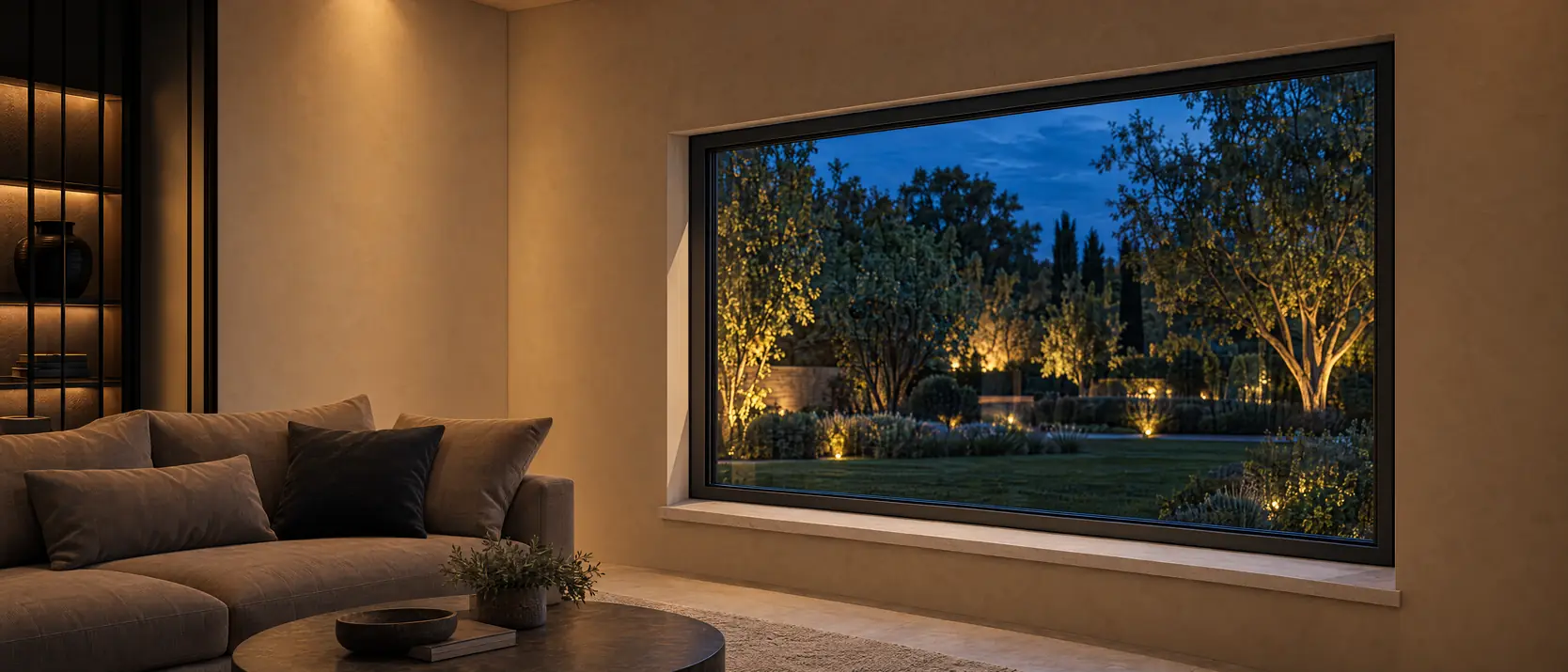
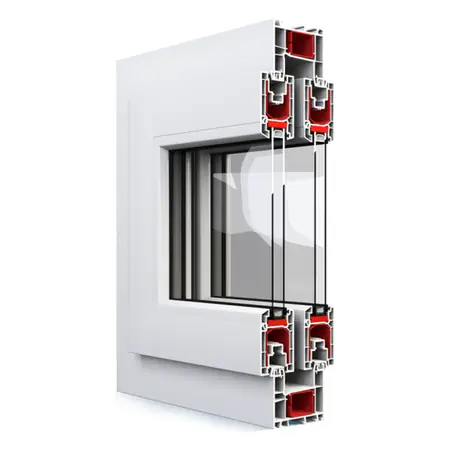
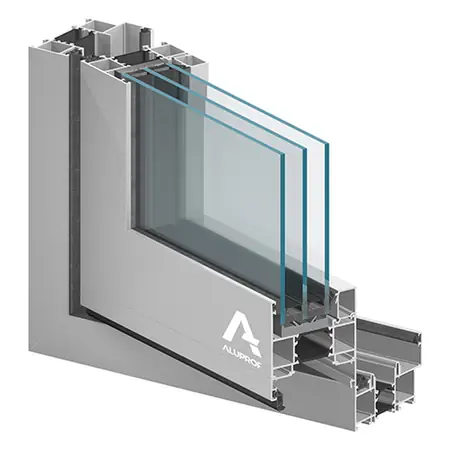
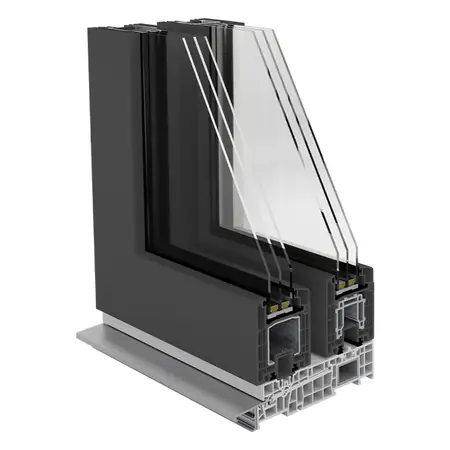
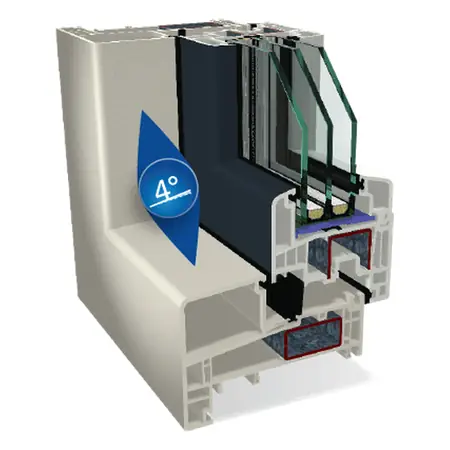
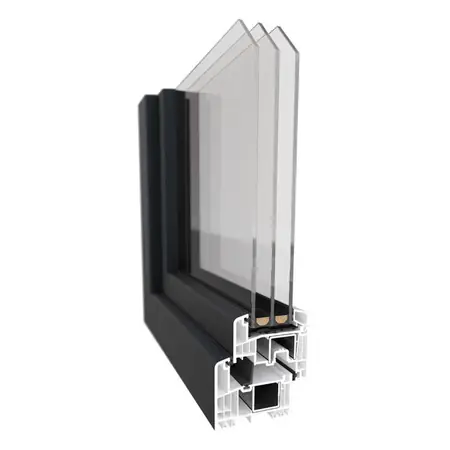
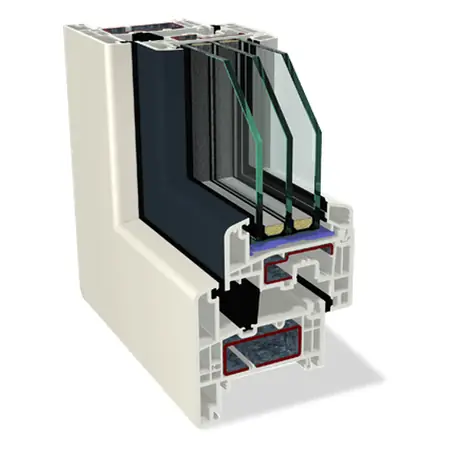
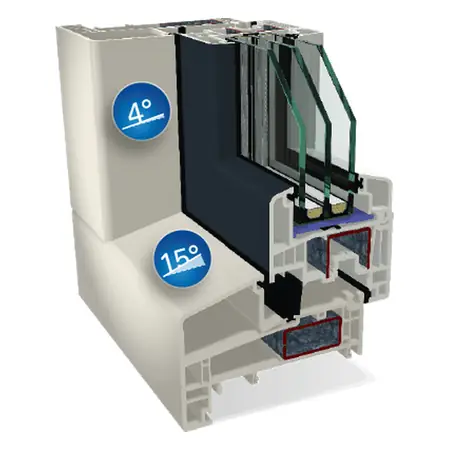
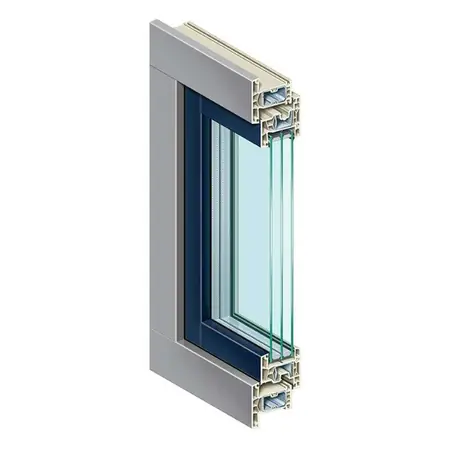
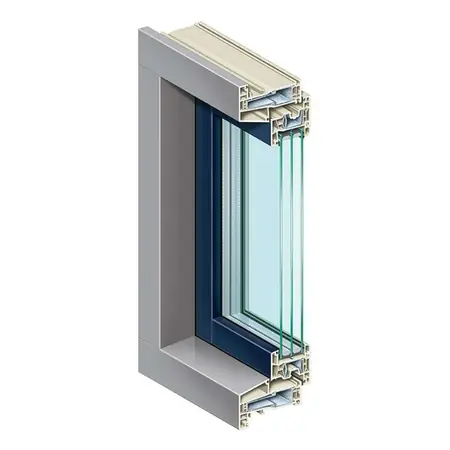
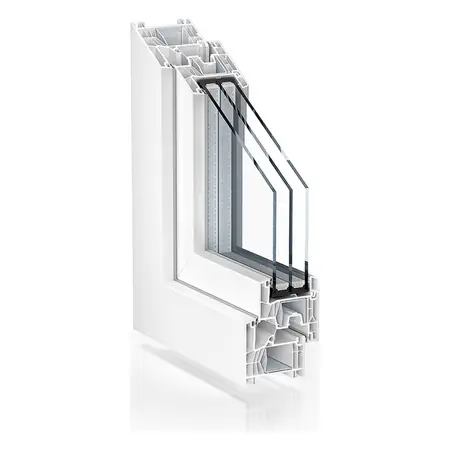
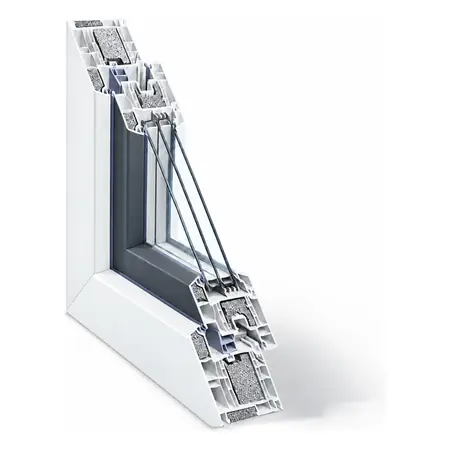
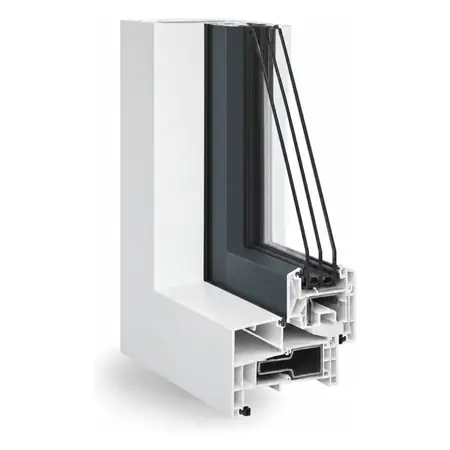
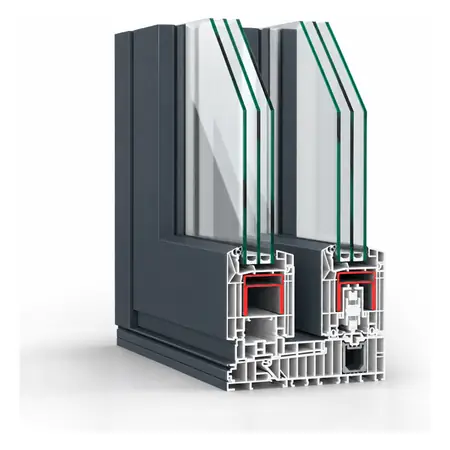
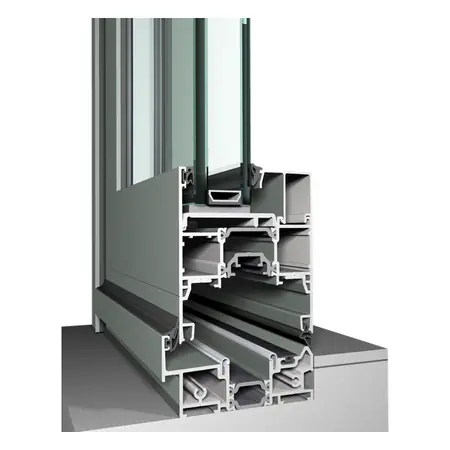
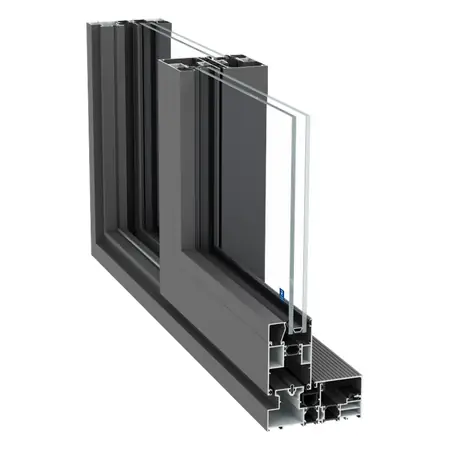
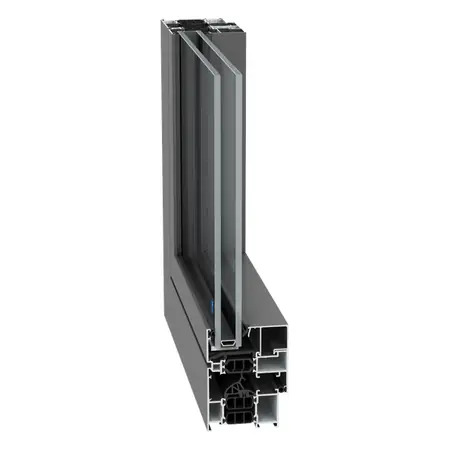
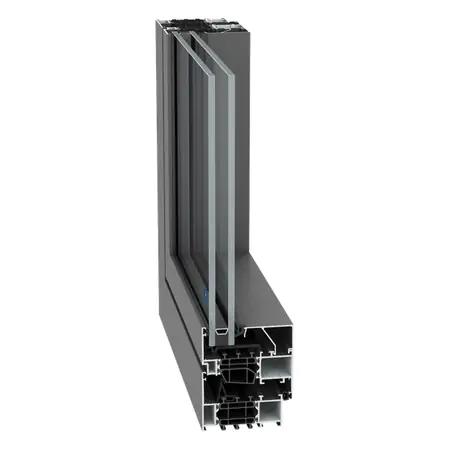
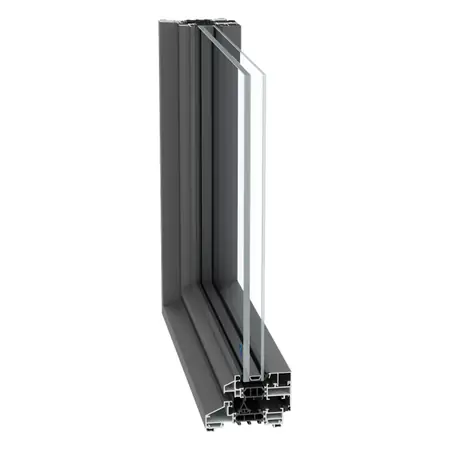
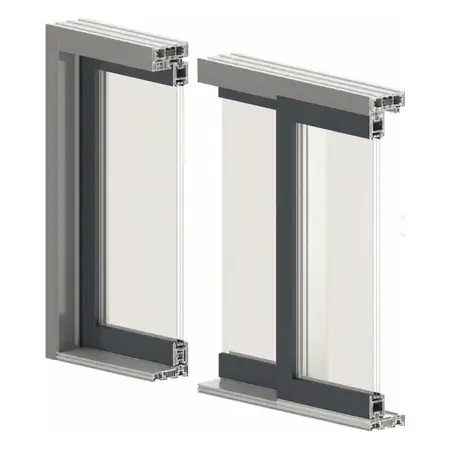
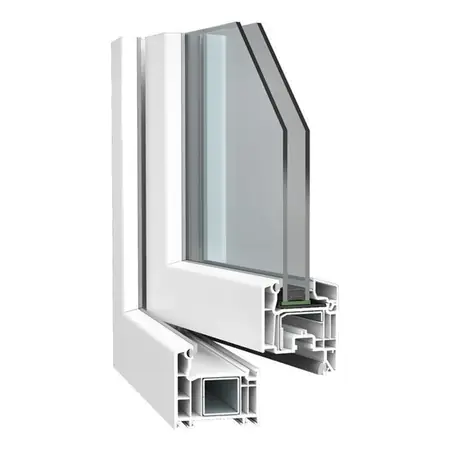
A picture window doesn't open. There is no sash in it and no hardware: the glass sits directly in the outer frame. That helps on three points at once — you see less profile, because there is no sash frame adding another 40 to 60 mm; there is nothing that can stick or wear; and it is the lowest-cost way to put glass in a wall. That is why a picture window is the classic choice for a view: a garden, a landscape, a kitchen extension or a stairwell where light matters more than air. Around fixed glass you see 65 mm of frame on the Aluplast Ideal 4000, 70 mm on the Schüco LivIng and 81 mm on the K-vision Trend.
When to choose a fixed window
The question with a fixed light is not whether it looks good but whether you can do without an opening. A window that doesn't open doesn't ventilate, and can only be cleaned on the outside from a ladder or scaffolding. With a ground-floor living-room window that is not a problem. With a first-floor bedroom it is, and then the ventilation has to come from somewhere else. Large picture windows on upper floors also need a plan for cleaning: a telescopic pole, a window cleaner, or a narrow opening section next to them.
A picture window with a tilt and turn beside it
The usual answer is to combine: a wide picture window with a narrow tilt and turn window beside it. You keep the view and you keep an opening for airing and cleaning. The narrowest section that can be made is 200 mm, so a 30 cm strip beside a three-metre glazed wall is technically quite possible. Fixed glazing is also the opening type that fits most profiles: no hardware is involved and the profile only has to carry glass. Which profiles that is with us, is shown above. Typical layouts: a living room with a picture window of two or three metres and one tilt and turn at the side; a gable with fixed glass up to the roof line; a stairwell with a tall fixed window and a top light; a kitchen with a long, low fixed pane above the worktop.
uPVC or aluminium picture windows?
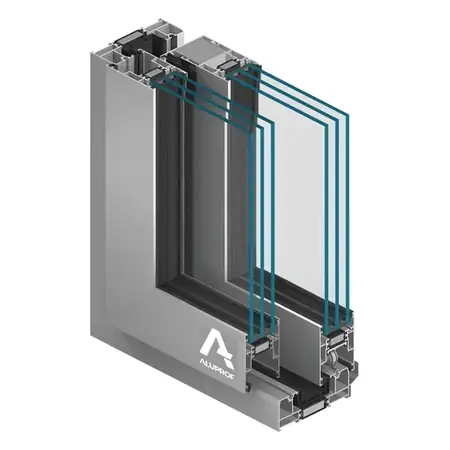
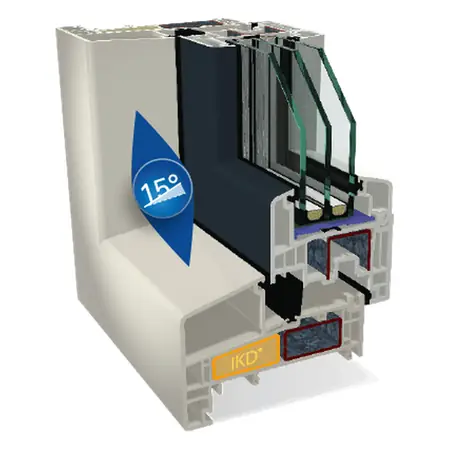
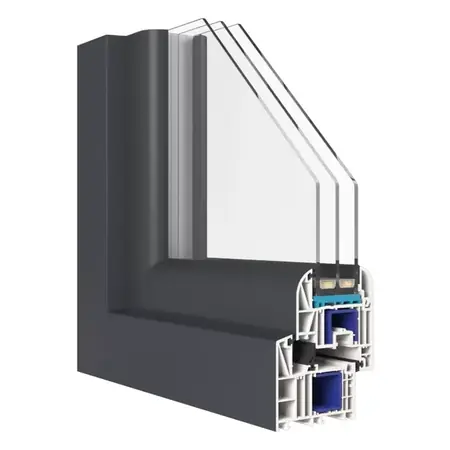
Here too uPVC is the cheaper of the two, and you can see that in the figures above. A fixed light has no hardware and no sash, so the profile only has to carry glass — then the material price counts for more than the load-bearing capacity. You buy aluminium here for the look: a sightline from 89 mm against 119 mm, and with a fixed light that frame is all you see. What that means per material is worked out on the two material pages below. Aluminium also goes largest: up to 6,000 × 3,000 mm, where the Gealan S 9000 in uPVC goes up to 3,200 × 3,200 mm. Powder coat in any RAL colour, against white, cream and the foil chart on uPVC.
Which profile for a picture window?
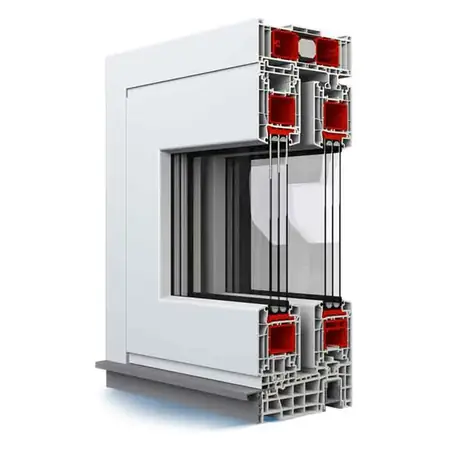
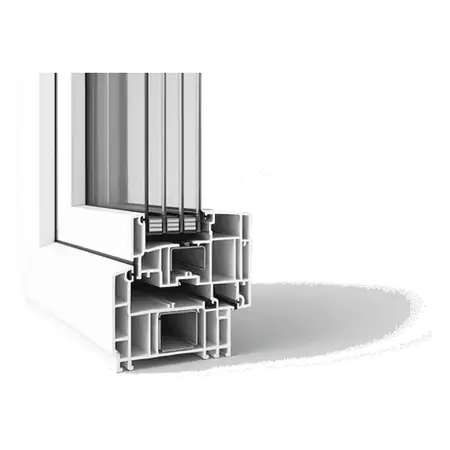
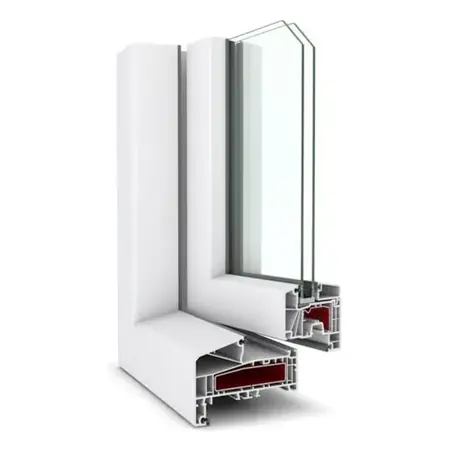
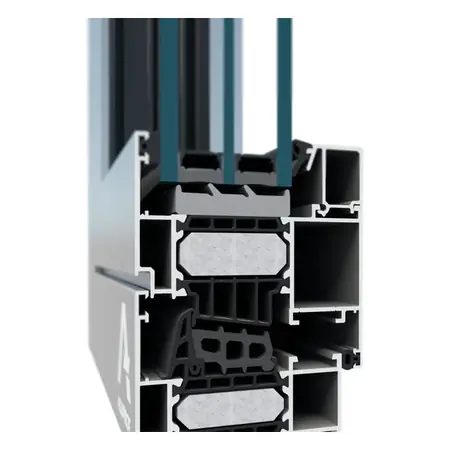
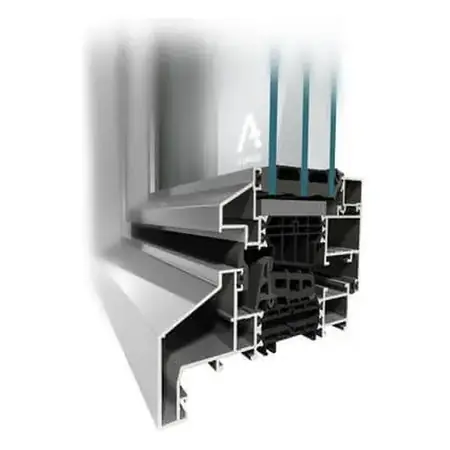
For a fixed light almost the whole range is eligible: no hardware is involved, so the profile only has to carry glass. Which ones is in the row above. That makes the choice here rarely a choice on its own — if there is a window or a door beside it in the same opening, take the same profile, so the sightline runs through and you don't see a jump in frame width. For the best insulation around a large pane, the Aluprof MB-86N at Uf 0.57 W/m²K is the best-insulating profile we make, uPVC and aluminium together.
Windows with a fixed light
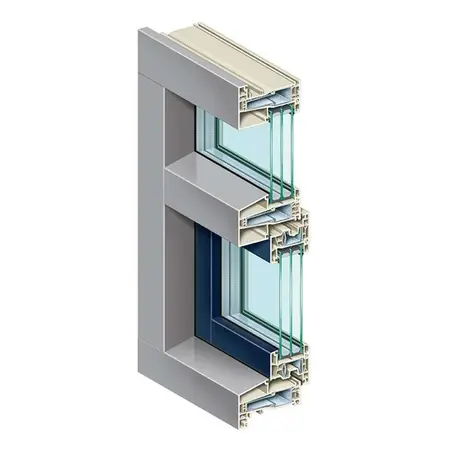
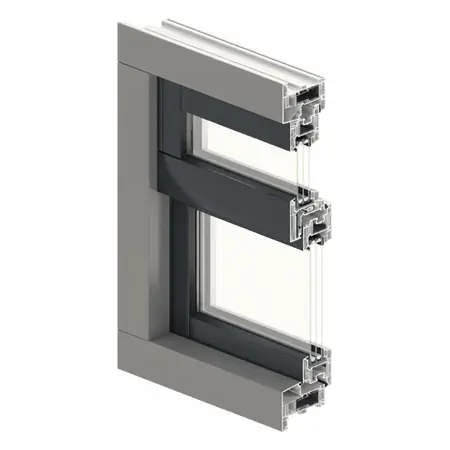
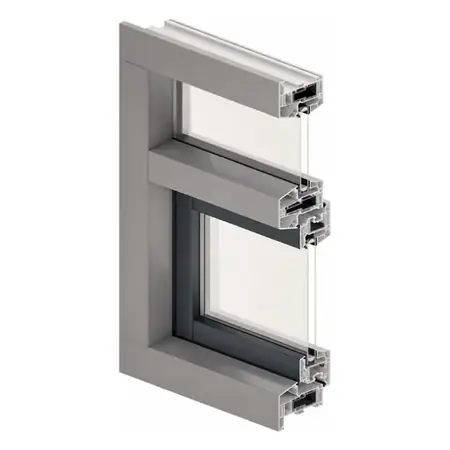
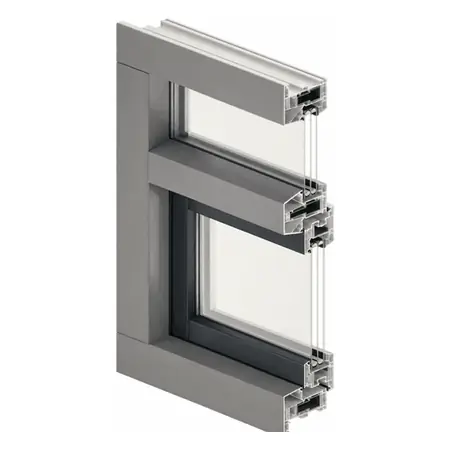
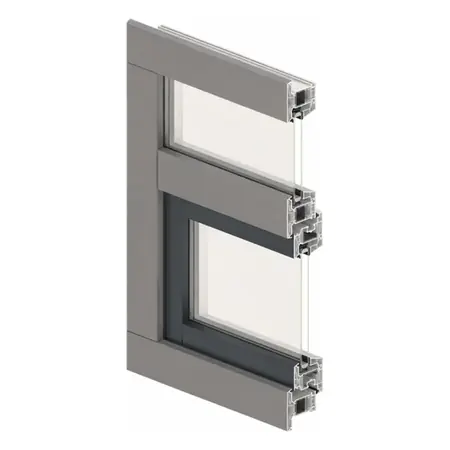
A picture window often sits beside or below a window that opens: a unit with a fixed light and a tilt and turn or bottom-hung window. Those combinations are ready as layouts; you choose the size. You can also choose a fixed sash: the same sash outline as the tilt and turn next to it, without hardware, so a row of windows looks alike although only some of them open.
Fixed windows made to measure
We make a fixed window to the overall size you give us, in uPVC or aluminium. In aluminium it goes largest, up to 6,000 × 3,000 mm. We make it within ±2 mm up to a metre and ±3 mm above that and measure it before dispatch. The quote follows within three working days, production takes 6 to 8 weeks, and delivery to the UK is quoted with your offer. We supply, we don't install.
Picture window sizes
A fixed window has a lower and an upper limit, and neither depends on the section itself. The narrowest section that can be made is 200 mm. The upper limit belongs to the profile: in aluminium a unit goes up to 6,000 × 3,000 mm, with the Aluprof MB-79N up to 5,000 × 2,700 mm, and for each uPVC profile the limit is on its profile page. What reaches the limit first on a large fixed light is the glass: triple glazing weighs 30 to 36 kg per square metre, so a section 2 by 2.5 metres already carries 150 to 180 kg of glass. Enter your size in the configurator and it tells you whether it can be made before you request anything.
Fixed glass, fixed sash or a fixed light beside an opening window
There are three ways to keep a window shut. With fixed glass the pane sits directly in the outer frame; that gives the slimmest frame and the most glass. A fixed sash is a sash frame without hardware: the same sightline as the tilt and turn window next to it, only closed, which gives a façade with a row of windows an even look. And a fixed light can be a section in a larger frame, beside or above a window that does open. Those combinations are ready in our configurations, from a fixed window with a top light to four sections side by side.
Glass in a picture window: double, triple, safety and obscure glass
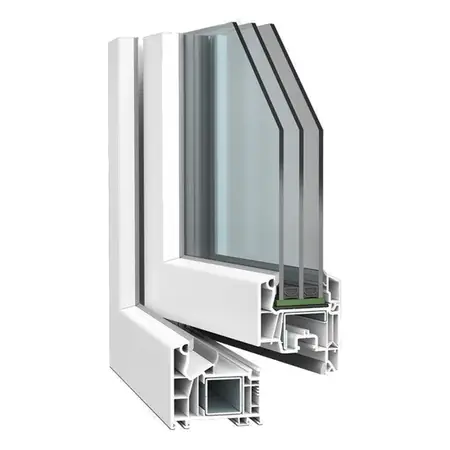
A fixed window takes any glass we supply: HR++ double glazing (Ug 1.1), triple glazing (Ug 0.6), obscure glass in double and triple, and P4A laminated safety glass in double (Ug 1.0) and triple (Ug 0.6). Obscure glass is for where light has to come in but people shouldn't see in, such as a bathroom or a side panel next to the front door. Laminated glass is for where a pane comes close to the floor or can be reached from outside on the ground floor: it holds together when it breaks. Because a fixed section has no hardware, the weight of heavy glass matters less here than in a sash.
Fixed windows with a trickle vent
A fixed window doesn't ventilate, and that is its only real drawback. A trickle vent above the glass solves it: fresh air comes in while the window stays shut. Whether you need one depends on the rest of the ventilation in the room; if the house has mechanical ventilation with heat recovery, the supply air is often already taken care of. Mention it in the notes with your request if you want a vent, and it goes into the offer.
How well a fixed window insulates
With the same profile and the same glass, a fixed window insulates slightly better than an opening one: there is no sash joint, and the frame is slimmer, so there is proportionally more glass. The glass makes the biggest difference. Our uPVC profiles sit at a Uf of 0.86 to 1.3 W/m²K and the best aluminium profile at 0.57; with triple glazing at Ug 0.6 a fixed window comes out lower than with double glazing. Part L asks for the Uw of the whole window; the Uw for your size and glass follows from the configurator and is in your offer.
Delivery, production time and fitting
Production time for a fixed window is 6 to 8 weeks, and you get your made-to-measure offer within three working days. Delivery to the UK is quoted with your offer. We supply, we don't install: your own installer takes out the old window, fits the new one and notifies the work through a competent person scheme such as FENSA or Certass.