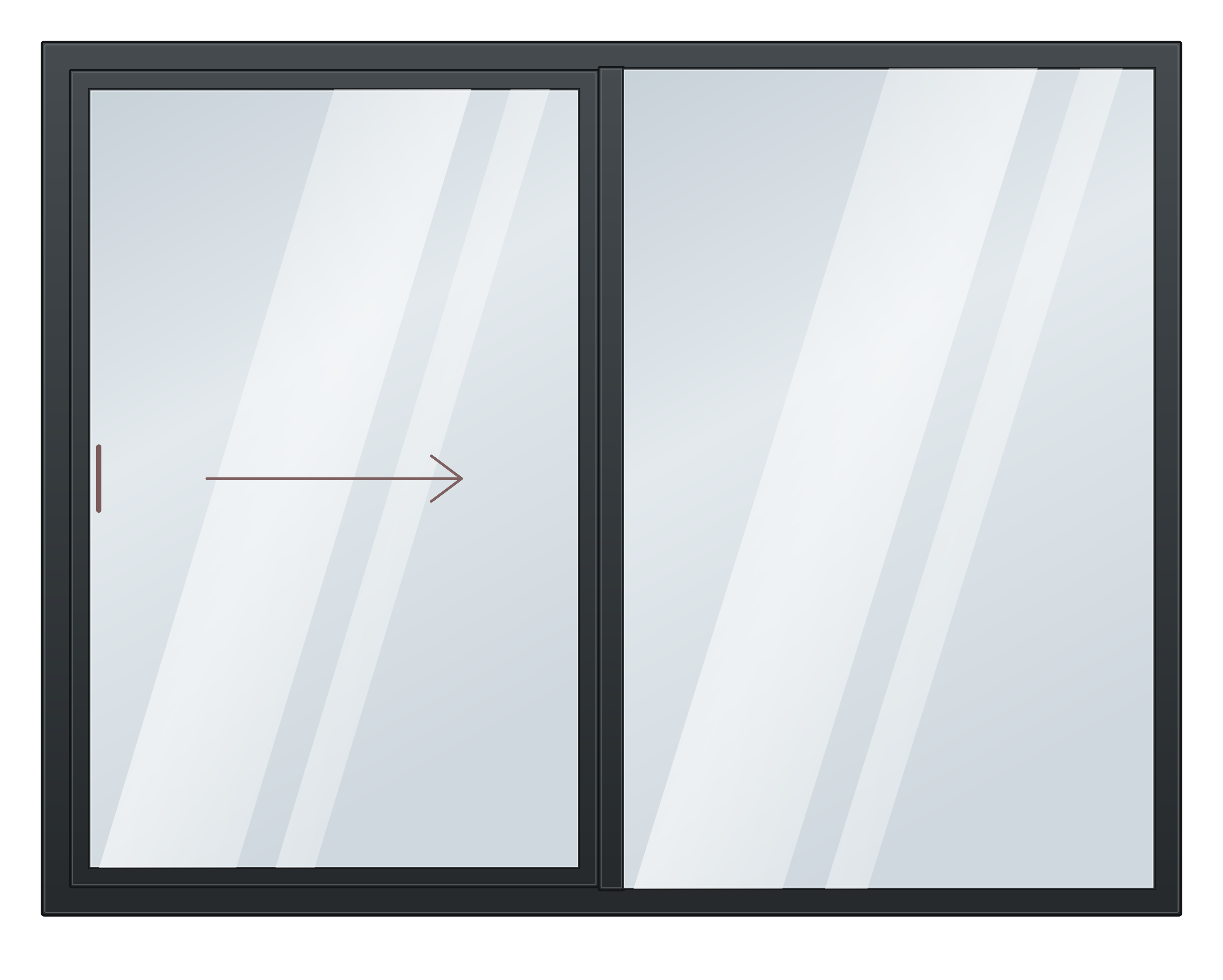
Opening types
Sliding patio doors made to measure
- Profiles
- 9
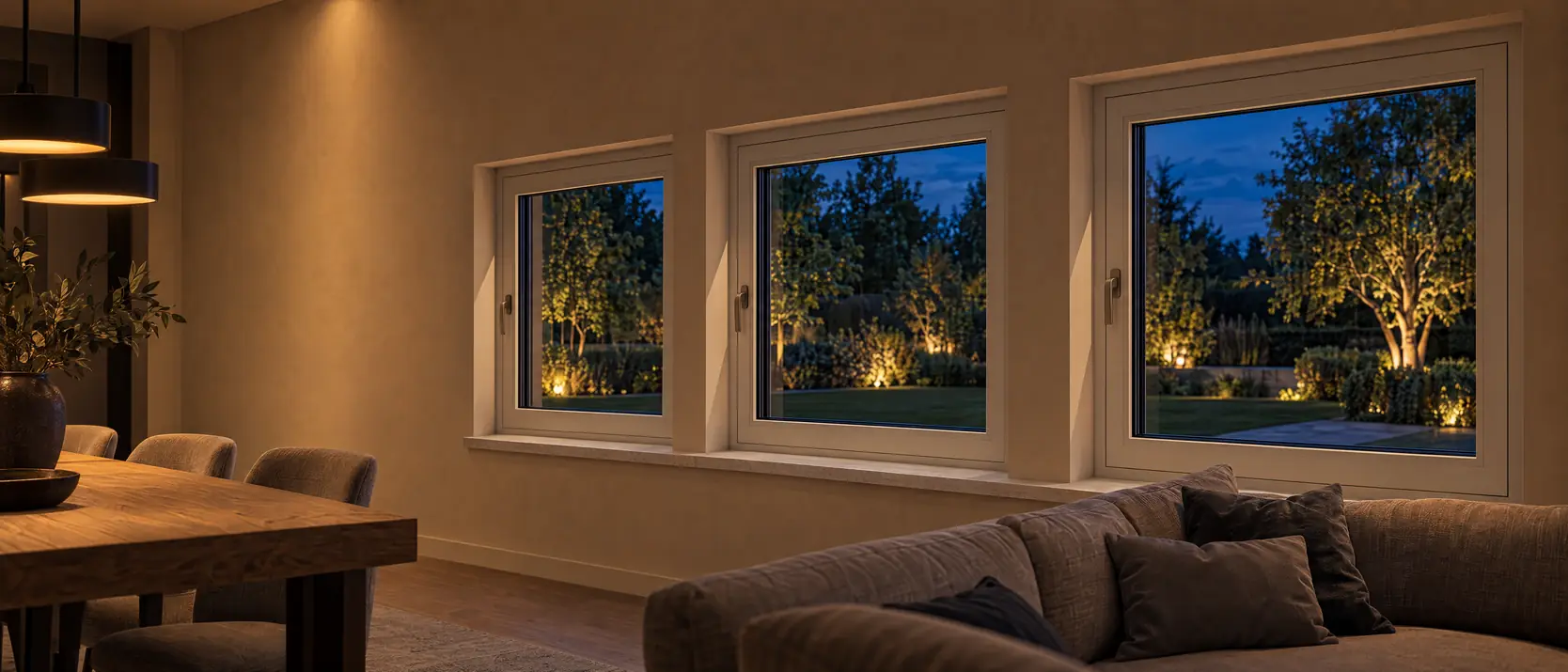
Chambers inside the profile hold back the heat, the colour is in the material and there is never anything to paint: uPVC windows made to measure, from five manufacturers.
Configure your windows online and receive a made-to-measure quote within three working days.
You configure each type to your own sizes in the configurator. Choose below where to start.
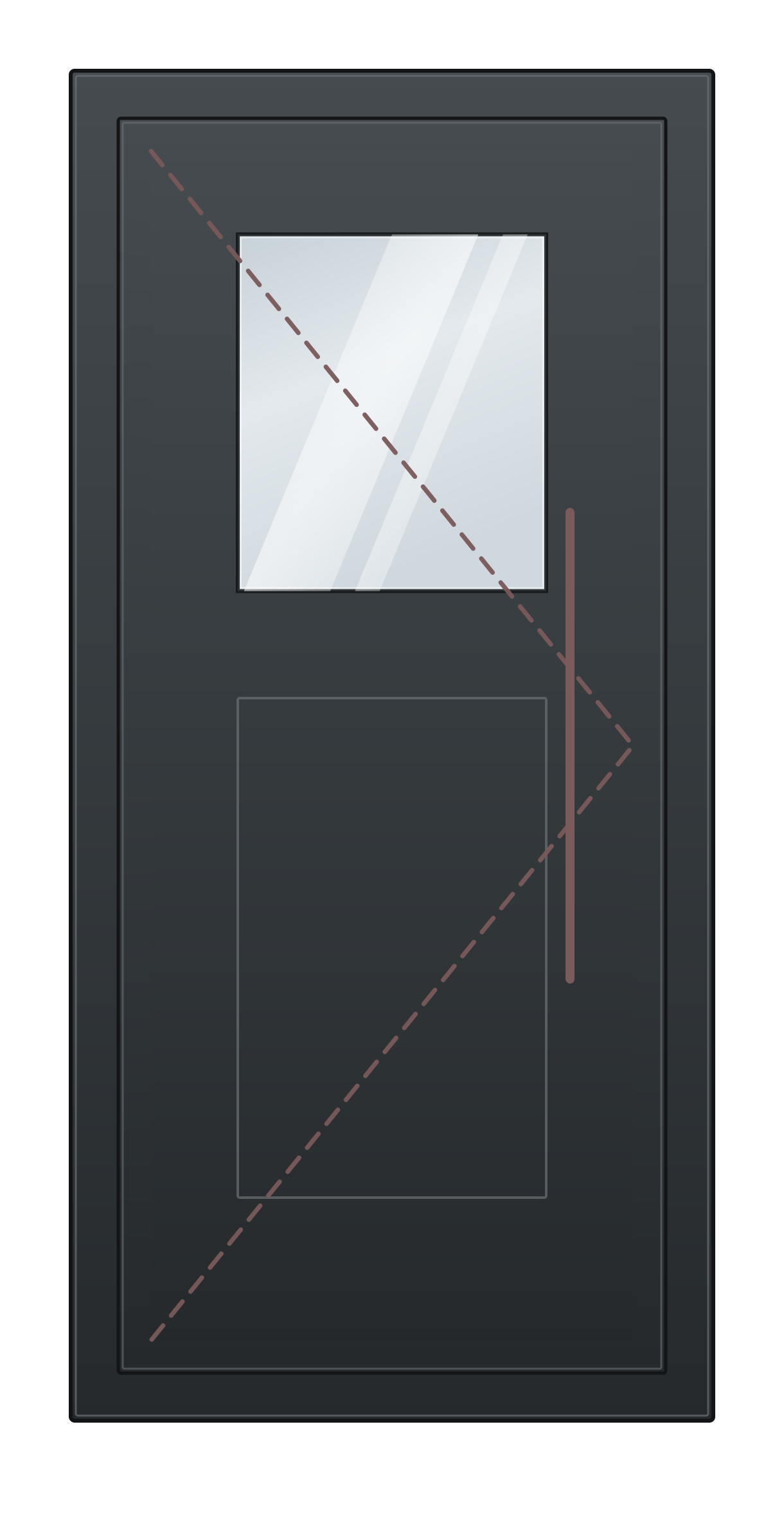
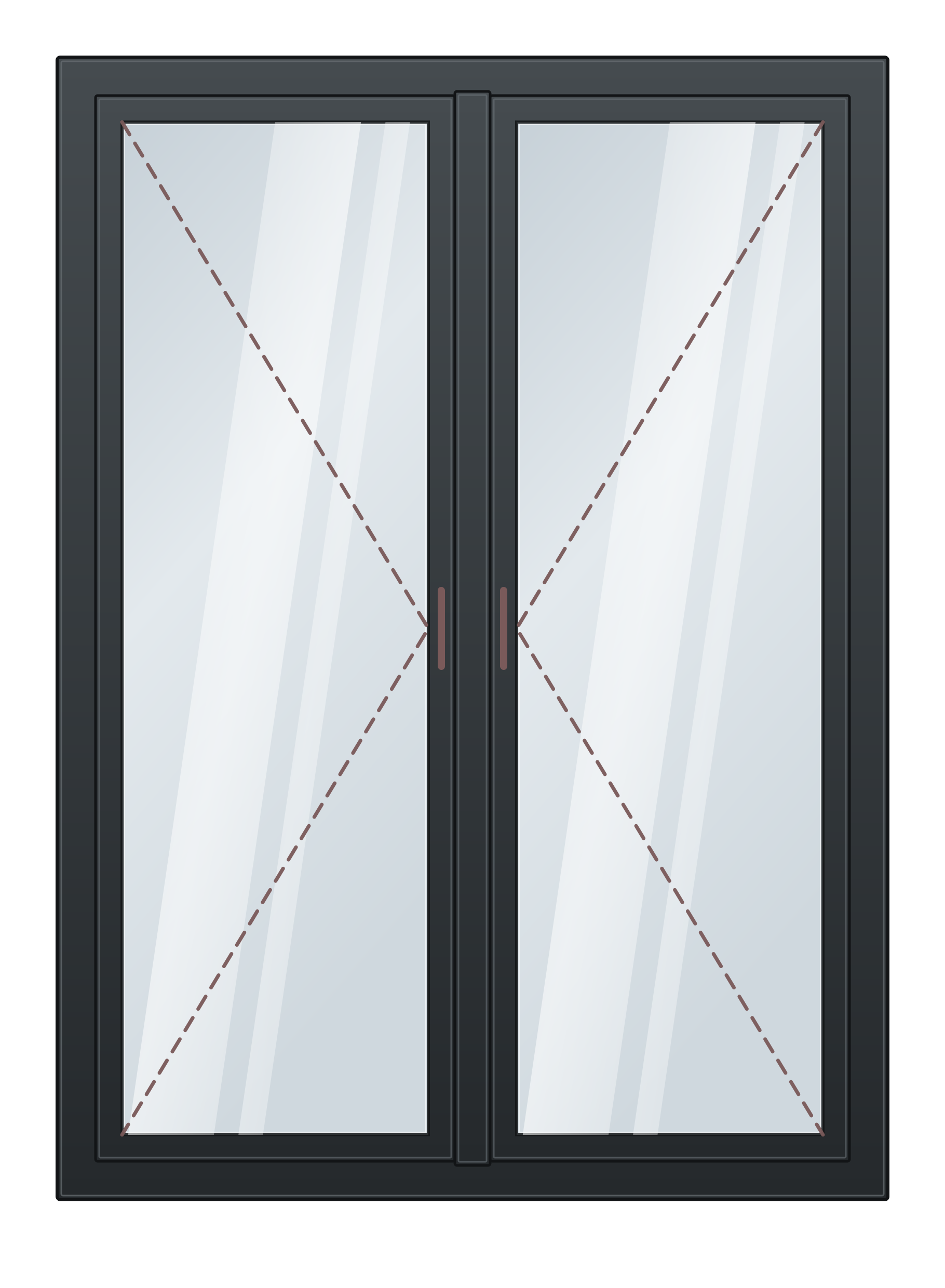
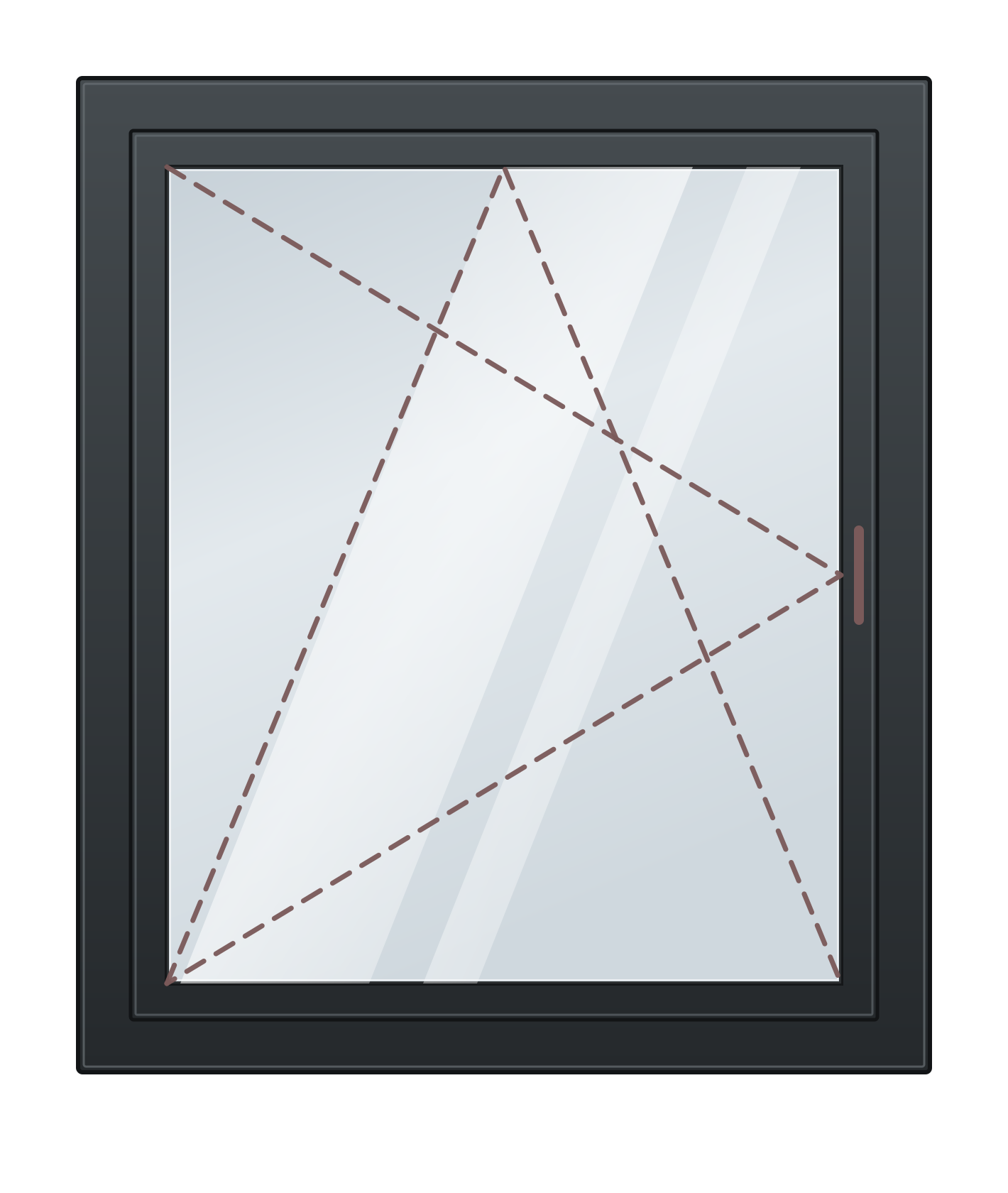

Choose type, profile, size, glass and colour in the configurator. You see your window in the drawing straight away.
We ask the manufacturer for the price and send you a quote for your sizes.
Once you accept, your window goes into production. You pay after accepting, by invoice.
Delivery to the UK is quoted with your offer. You fit it yourself or with your own installer.
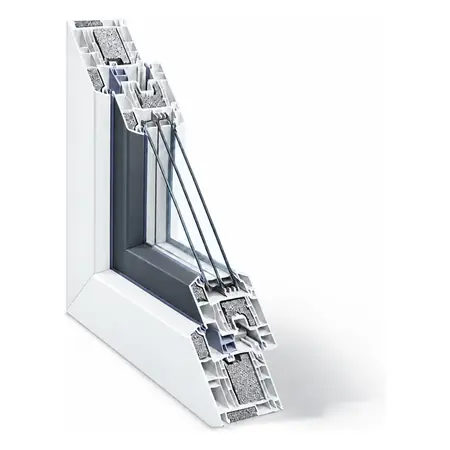
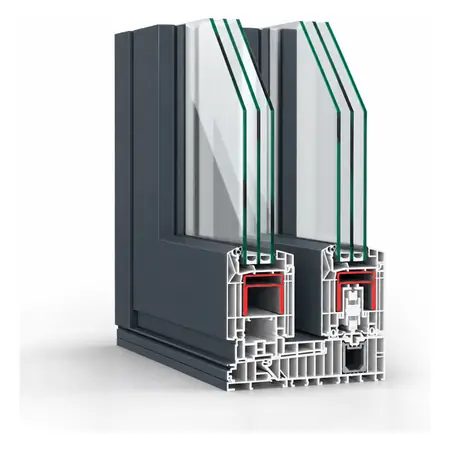
Uf, frame depth and sightline come from the profile table. The corner section is the manufacturer's render of exactly this profile: for Aluprof always the same shot — closed corner, close up — and for Gealan the render of the S 9000 NL family. The maximum sash width is on every profile page.
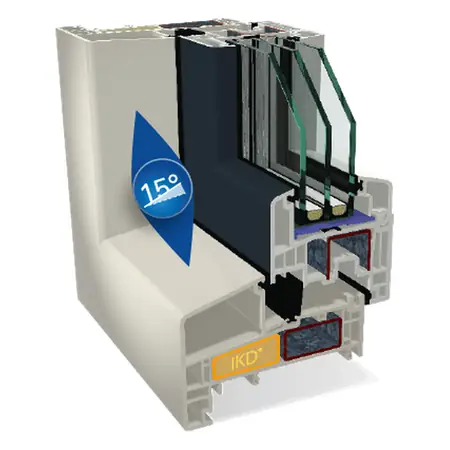
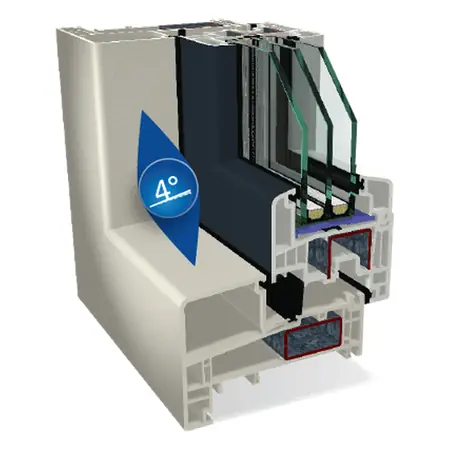
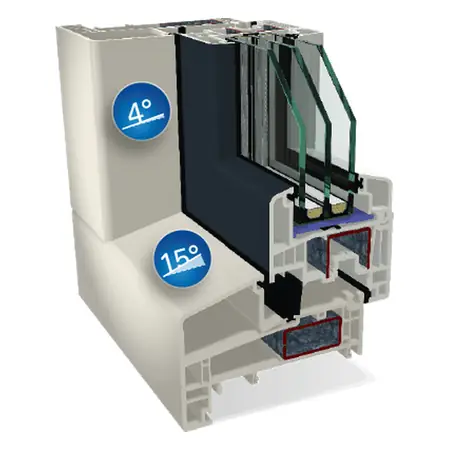
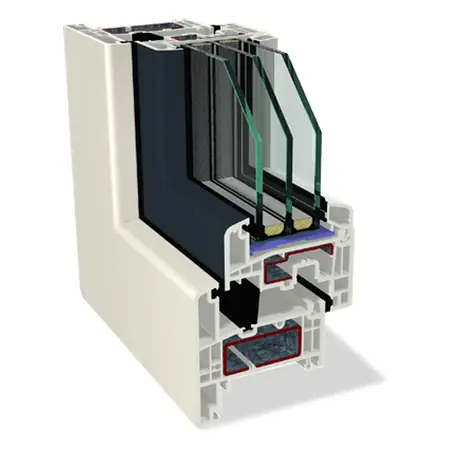
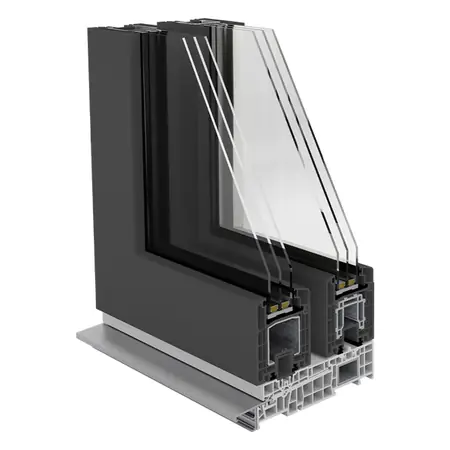
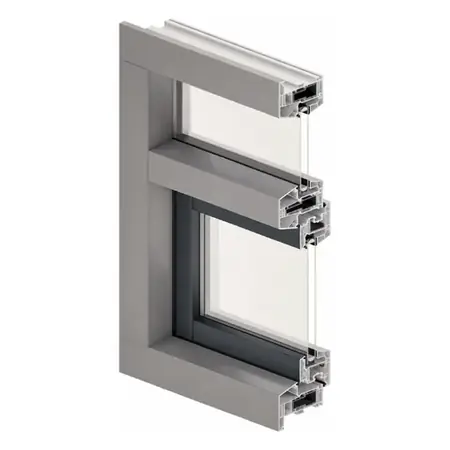
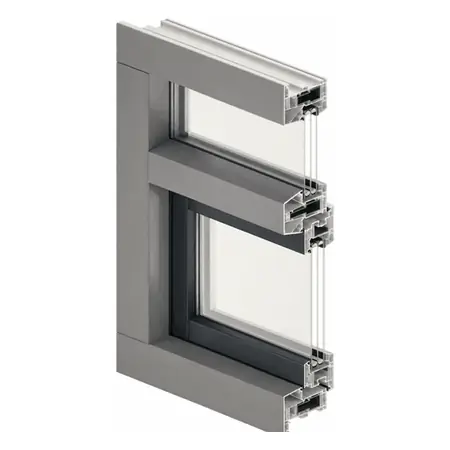
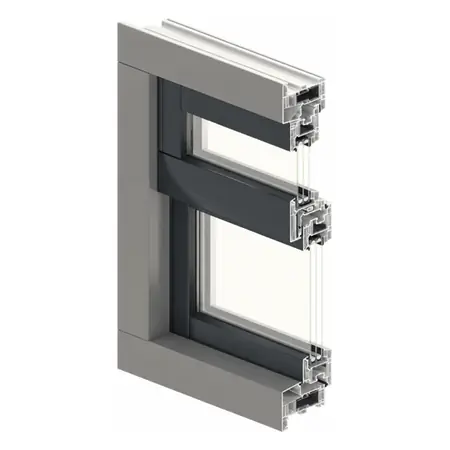
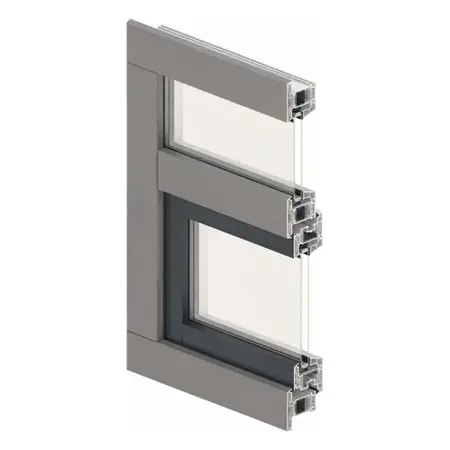
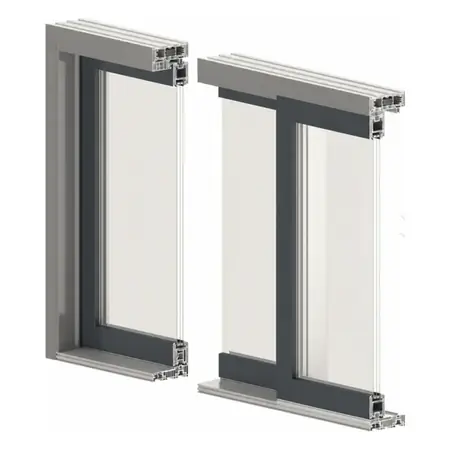
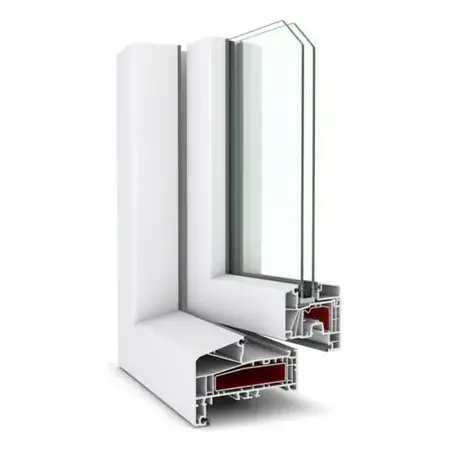
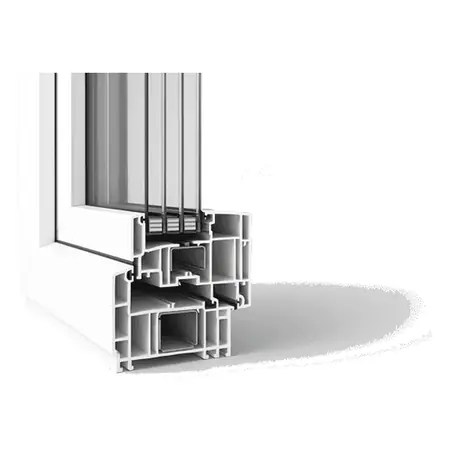
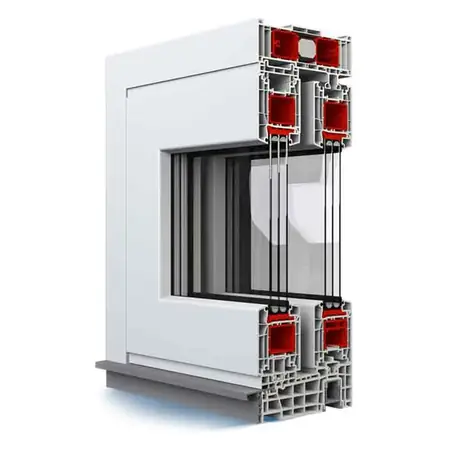
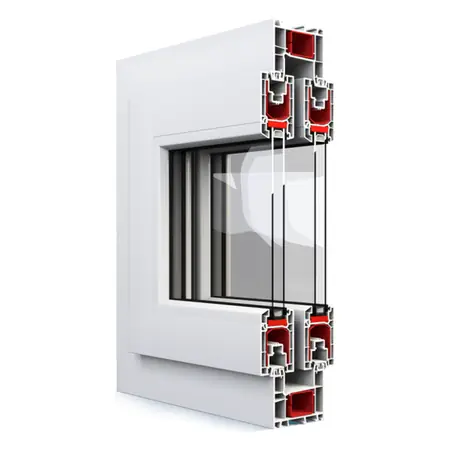
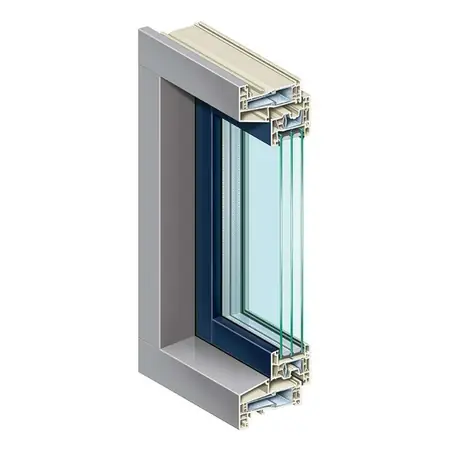
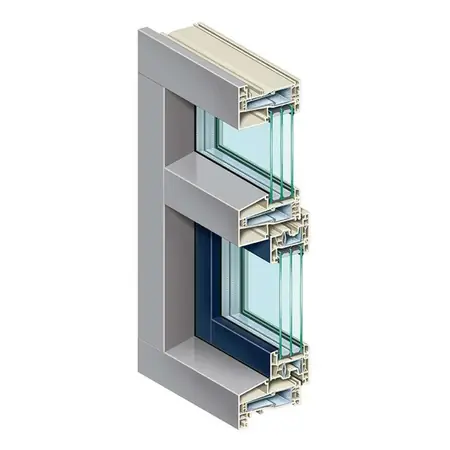
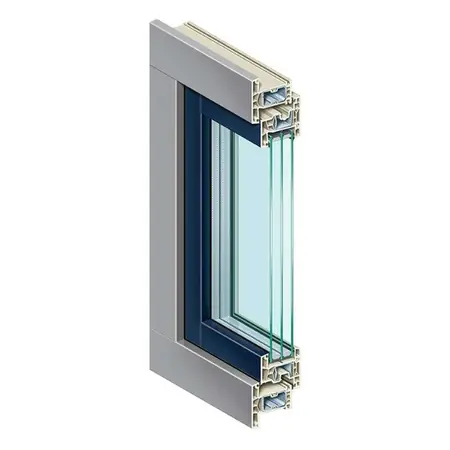
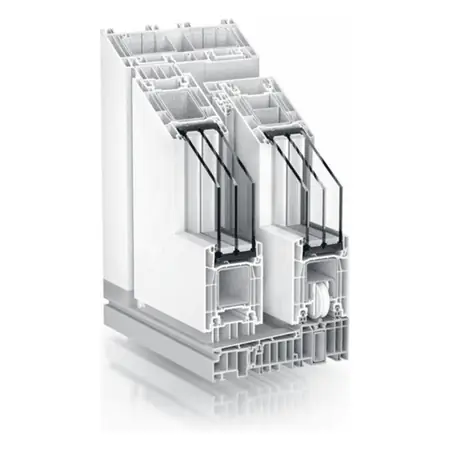
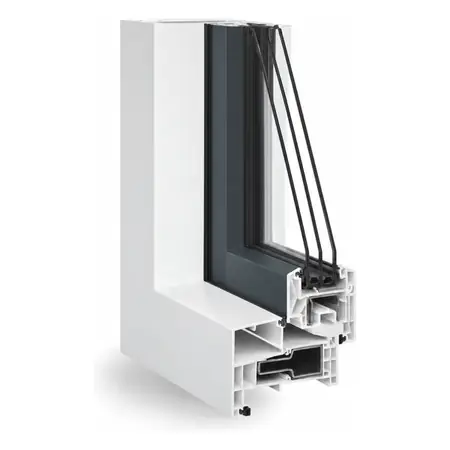
No form first: you watch your window take shape as you choose. The price follows in the quote, within three working days.
Inside and outside can differ; you choose both in the configurator.
In the Netherlands, where we are based, uPVC is the most chosen window material, and not on price alone. A uPVC profile is built up from chambers — hollow spaces inside the profile that hold back the heat — and the more chambers over the more frame depth, the better it insulates. Maintenance is a wipe with water; there is nothing to paint, because the colour is in the material itself or in a foil laminated onto it.
Our uPVC profiles run from 80 to 194 mm frame depth. They differ in three things you can check on every profile page: how deep the frame is, how wide it shows (a sightline of 119 to 150 mm), and how large you can make it — up to 3,200 × 3,200 mm for windows and doors with the Gealan S 9000 NL, and up to 6,500 × 2,700 mm for its lift-and-slide door; for the other ranges no maximum has been fixed yet. Within uPVC the insulation figure varies little: Uf 0.86 to 1.3 W/m²K where the manufacturer states it. That is the frame on its own, not the whole window. If you want clearly lower, you end up with aluminium.
Where uPVC stops: at large openings and at slim sightlines. The material is less rigid than aluminium, so a sash has to be reinforced or split sooner. If you need a window wider than 3,200 mm, or a sightline slimmer than 119 mm, you end up with aluminium. And colour: uPVC works with foils, aluminium with powder coating in any RAL colour.
Every window is made to the size you enter, to the millimetre. You order on the outside frame size; we measure each unit before it ships.
We supply and don't fit. You pay the factory price plus delivery and arrange fitting yourself or with an installer you choose.
Ordering online with us means no showroom and no salesperson at the table, but a made-to-measure quote that a person checks. Your quote arrives within three working days.
The best is the profile that suits your opening and your insulation needs. Compare three numbers: frame depth, sightline and Uf. They are on this page for each profile.
Our uPVC profiles come from five brands: Gealan, Rehau, Schüco, Aluplast and K-vision. Each profile page shows the maker and the series.
Small windows are made to measure too. The configurator checks the smallest size each profile and opening type can take.
That depends on size, layout, glass and colour, which is why there is no figure here. The guide price on the profile pages is the advance indication; the configurator itself shows no price. You send your configuration as a request, and within three working days you hear from us with a quote for your sizes — if it takes longer, you hear that within the same three days. Prices in GBP, excl. UK VAT and import duties, which are payable on delivery.
Five brands: Gealan (the S 9000 in the Base, Haax, Slim and Styl versions, plus the lift-and-slide door), Rehau (Geneo, Synego and the Synego lift-and-slide door), Schüco LivIng (City, Vlak, Verdiept 6 and Verdiept 15), Aluplast (Ideal 7000 NL, Ideal 4000, the HST 85 lift-and-slide door and the Multi Slide sliding patio door) and K-vision by Kömmerling (Trend, Cube, Classic and the PremiDoor lift-and-slide door). Each profile has its own page with the cross-section, the dimensions and a comparison with its neighbours.
That differs per profile and is in the specifications on each profile page. The configurator refuses a size the chosen profile cannot take; if you are close to the limit, choose a profile that goes further or split the window into sections.
uPVC insulates amply for an ordinary window and is the cheaper of the two. Aluminium is stronger and slimmer: it wins at large openings, slim sightlines and any RAL colour. If you are unsure, compare frame depth, sightline and Uf on the profile pages — those are the three figures that make the difference.
We don't give a number of years, and for a reason: none of the manufacturers' brochures we have from our suppliers gives one. What you can judge is where the colour sits. With Gealan it is acrylcolor — a coloured acrylic layer co-extruded onto the profile in the same production process. The manufacturer says it has made that system for more than forty years and describes it as scratch-resistant and weather-resistant. With K-vision the colour is in a foil, Renolite, which the manufacturer calls UV-resistant. Either way there is no paint layer to keep up. If the brochure for your profile states no guarantee period, we don't have one either — and we won't make one up.
With white there is nothing on top: it is the colour of the material itself, so there is no foil that can come loose and no lacquer that can fade off. Whether that white shifts over the years we don't know from our own measurements, and none of our manufacturers' brochures puts a figure on it — so neither do we. What you usually see on a white frame is dirt rather than discolouration. Gealan says of its acrylic surface that it is smooth and non-porous and therefore does not hold dust; a wipe is enough. With a coloured profile the question is about the foil or the acrylic layer, and that is covered above.
Technically yes — they are separate units. But the sightlines differ: our uPVC window profiles show 99 to 140 mm (the lift-and-slide doors 65 to 180 mm), aluminium 89 to 188.5 mm. Side by side on the same elevation, that difference shows. Combining works best when the two materials are on different elevations, or when the contrast is intended.
Yes. In England, Approved Document L sets the limit for a replacement window in an existing home: a **U-value of 1.4 W/m²K or Window Energy Rating band B**, and the new window may not be worse than the one it replaces. Note that this is the U-value of the **whole window (Uw)** — frame and glass together. The Uf on our profile pages is the frame alone and the Ug is the glass alone; neither is the figure Part L asks for. The Uw of the whole window is in your offer. Replacing windows is also notifiable work in England and Wales: either the installer is registered with a competent person scheme (such as FENSA or Certass) and notifies it, or you notify building control before the work starts. We supply, we don't install — so this is arranged by your installer, and it is worth agreeing before you order. Scotland and Northern Ireland have their own rules; check them locally.
Frame depth and Uf for insulation, sightline for how much glass you see, and the opening type for how you use the room. Check that your installer will register the work under Building Regulations.
With lukewarm water, a little washing-up liquid and a soft cloth or sponge. No abrasive cleaners and no solvents: they damage the surface or the foil. Give the seals a wipe now and then.
The profiles are extruded by the system maker, then cut, welded at the corners, fitted with hardware and glazed by the manufacturer. We measure each finished unit before it ships.
uPVC shows a wider frame than aluminium and is less stiff, so a large sash needs splitting sooner. Colour comes from a foil or the base colour, not from any RAL colour as with aluminium.
Choose type, profile, size, glass and colour. Within three working days you receive a quote for your sizes — with no obligation.
Configure your window or door