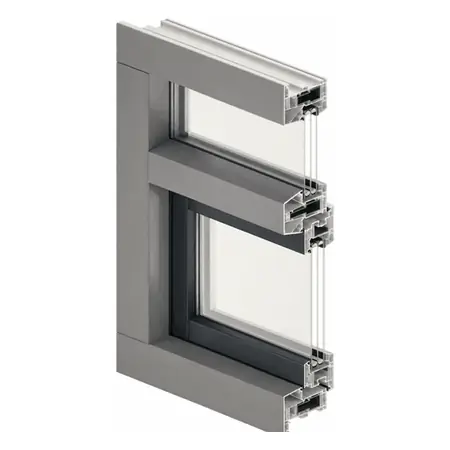
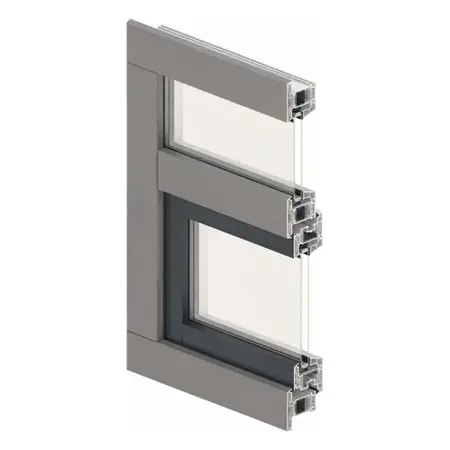
How do tilt and turn windows work?
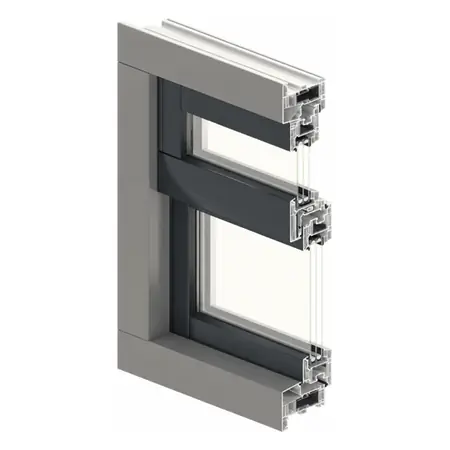
Tilt and turn is the standard window of north-west Europe, and not by accident. The same handle does two things: turned horizontally, the sash swings fully open into the room; turned upright, the top of the sash tilts inwards. That second position is why it is so common — you can air a room without the window standing wide open, in the rain and while you're not at home. Unlike an outward-opening casement, both positions open inwards, which is also how you clean the outside pane from indoors.
Tilt and turn vs uPVC casement windows: the difference is in the hardware
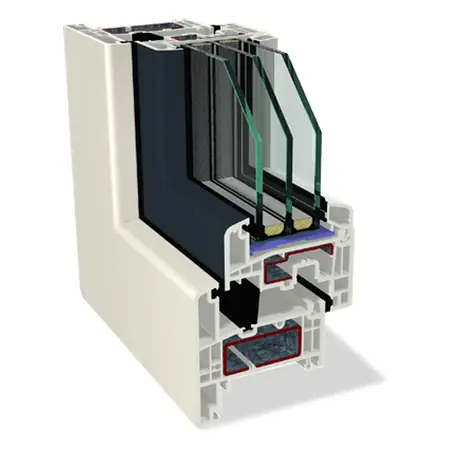
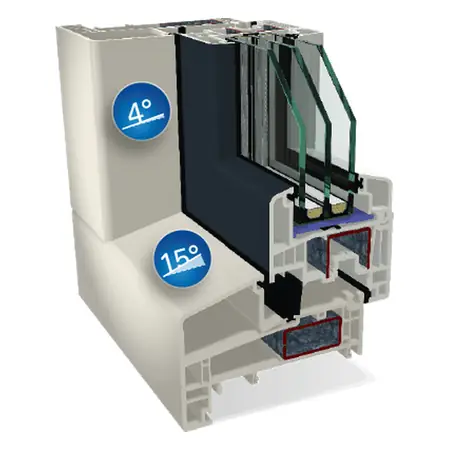
Technically a tilt and turn window is the same section as a side-hung casement; the difference is in the hardware. That also means the price difference comes from the hardware and not from the profile. A tilt and turn window has its own sash frame, and that costs you sightline: it adds 40 to 60 mm of profile compared with a fixed light in the same place.
How big can a tilt and turn window be?
The practical limit is the sash width. Every profile has a maximum for the widest opening part — for our tilt and turn profiles it lies between 1,350 and 1,600 mm — and that maximum exists because the pivot point has to carry the weight. A wide, tall tilt and turn sash with triple glazing gets heavy, and heavy hardware drops sooner. Two narrower sashes are better than one wide one.
uPVC or aluminium tilt and turn windows?
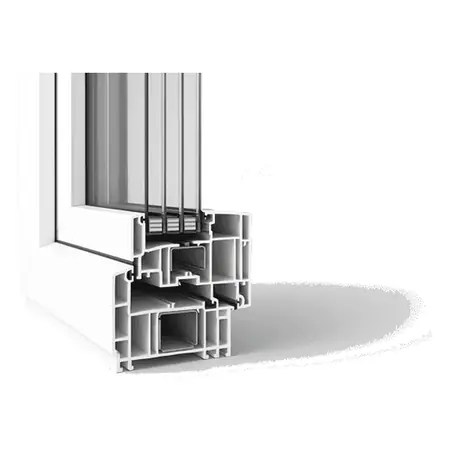
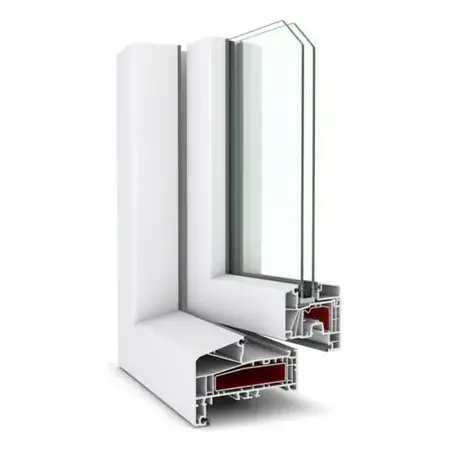
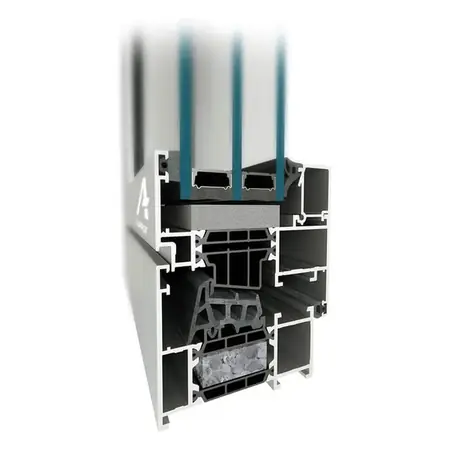
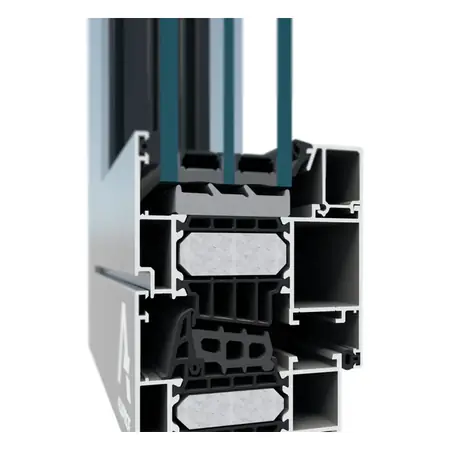
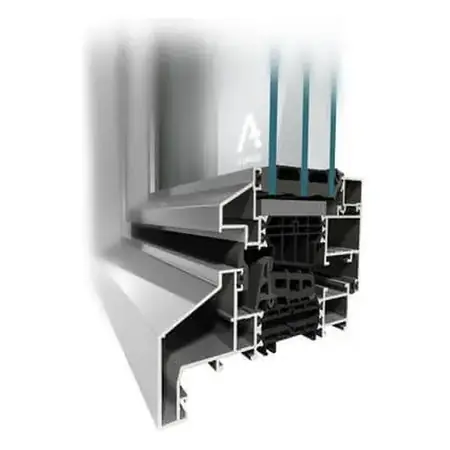
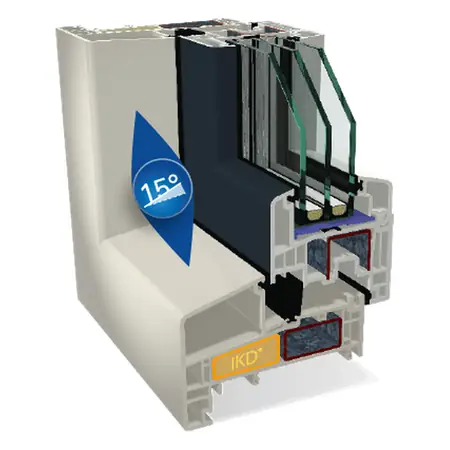
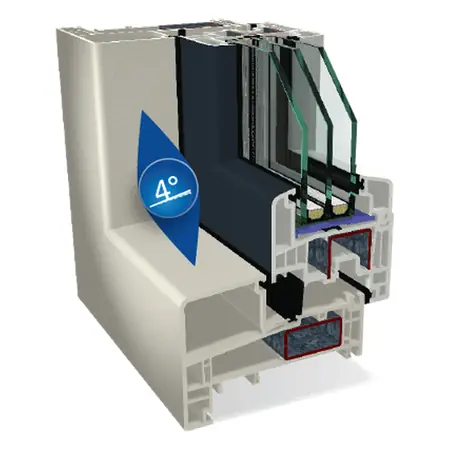
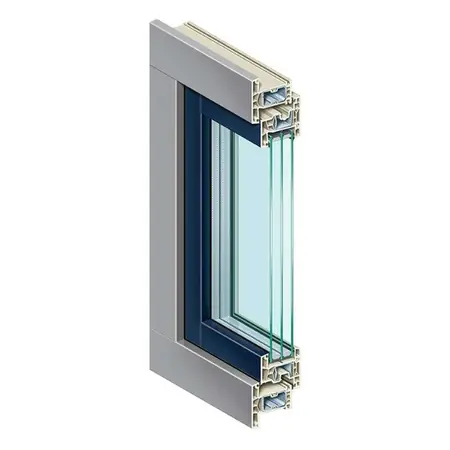
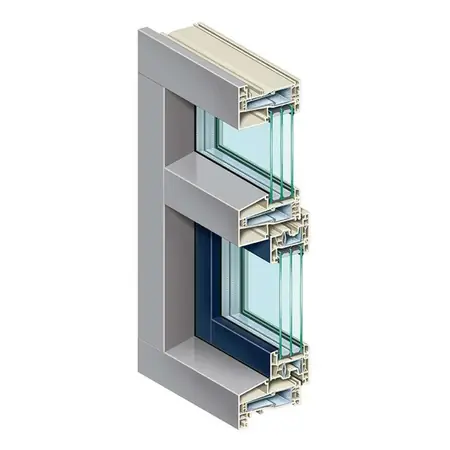
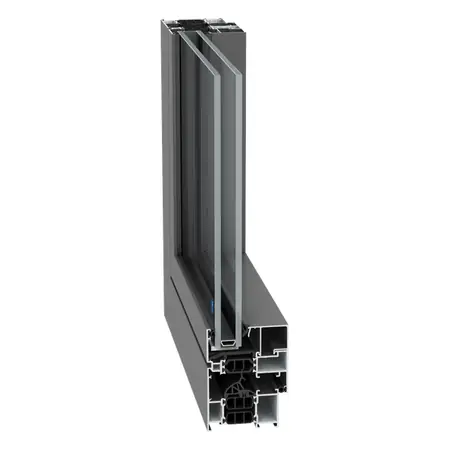
At a window of this size uPVC is the cheaper of the two, and you can see that in the figures above. It only turns around at door and patio sizes, where aluminium manages with less profile. What aluminium does offer here is a slimmer sightline — from 89 mm with the Reynaers CS 77 against 119 mm with the Gealan S 9000 — and a lower frame U-value: Uf 0.57 with the MB-86N against 1.10 for uPVC. What that means per material is worked out on the two material pages below.
Part L: what a replacement tilt and turn window has to meet
Then there are Building Regulations. In England, Approved Document L sets the limit for a replacement window in an existing home: a U-value of 1.4 W/m²K or Window Energy Rating band B, and the new window may not be worse than the one it replaces. Take care which U-value that is. Part L asks for the Uw of the whole window — frame and glass together. Our profile cards show Uf, the frame alone, and the glass has its own Ug; neither of those is the figure Part L asks for, and a low Uf on its own does not make a compliant window. The Uw of the whole window is in your offer, and that is the figure your installer needs. For a tilt and turn window the sash frame counts in that figure, which is one reason the profile choice still matters. We don't work out here whether your window passes: that depends on your size, your glass and your profile, and the Uw in the offer is the answer to that question.
Who notifies building control when we don't install?
The condition that catches people out has nothing to do with the glass. Replacing windows is notifiable building work in England and Wales. Either the installer is registered with a competent person scheme — such as FENSA or Certass — and notifies the work themselves, or you notify building control before the work starts. Because we supply and don't install, this is not something we can do for you: it sits with whoever fits the window, so agree it with them before you order. Scotland and Northern Ireland have their own rules; check them locally. Ventilation is part of the same conversation with your installer — a trickle vent is in our options list at step 6 if you need one.
Which profile for a tilt and turn window?
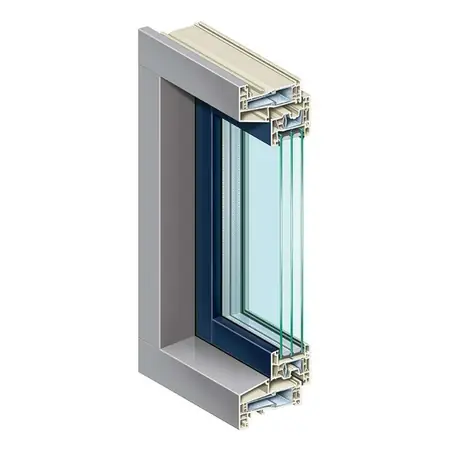
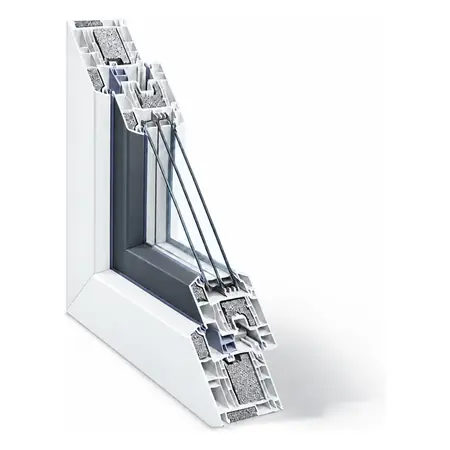
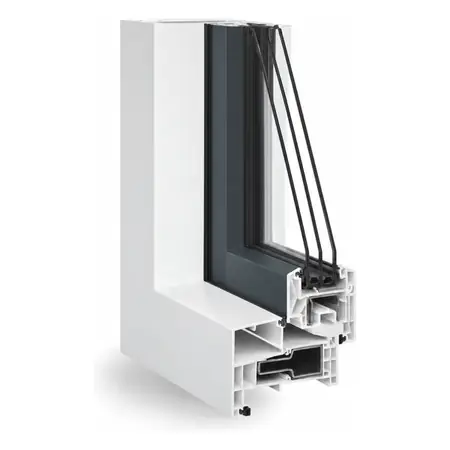
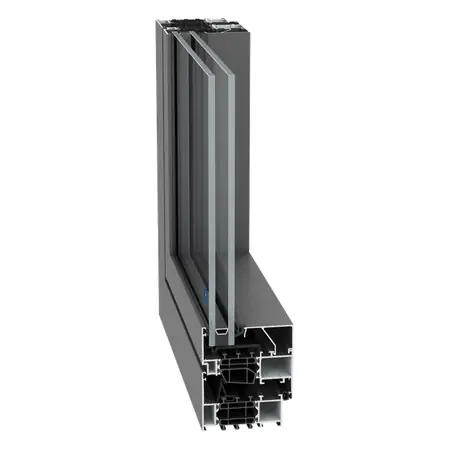
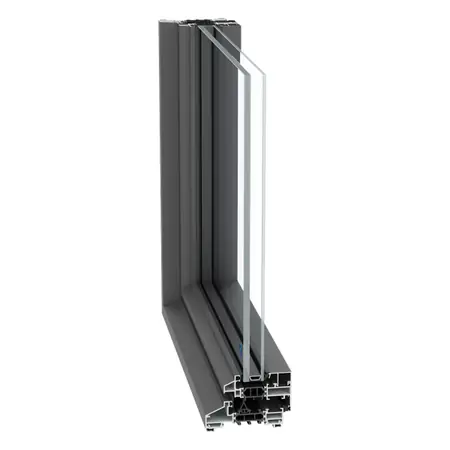
The row above shows which profiles are eligible for a tilt and turn window . There are fewer choices than it looks, because there is a pair among them that differs only in profile shape. What is left is a choice on three figures: how deep the frame is, how wide it shows, and how well it insulates.
Tilt windows and tilt and turn windows
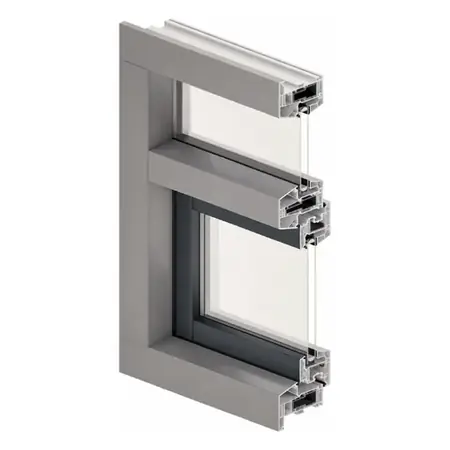
A tilt window only tilts in at the top; a tilt and turn window does that and also opens fully. You work both positions with one handle. If you only want the tilt position, a bottom-hung (tilt-in) window is the form for it.
Tilt and turn window won't close?
If a tilt and turn window won't close, the handle is often halfway between two positions, or the sash has come off its hinge. Turn the handle back to the turn position and push the sash square into the frame. If that doesn't help, the hardware needs adjusting.
Securing a tilted window
A lockable handle stops the window being opened from outside or by children; you choose it in the configurator. The tilt position isn't a locked position: a tilted window is open.