uPVC tilt and turn windows
typically £320 to £448 per unit, excl. UK VAT and import duties The spread is too wide for a single amount; this is the range they fell within. measured on 94 quotes from our own archive
Configure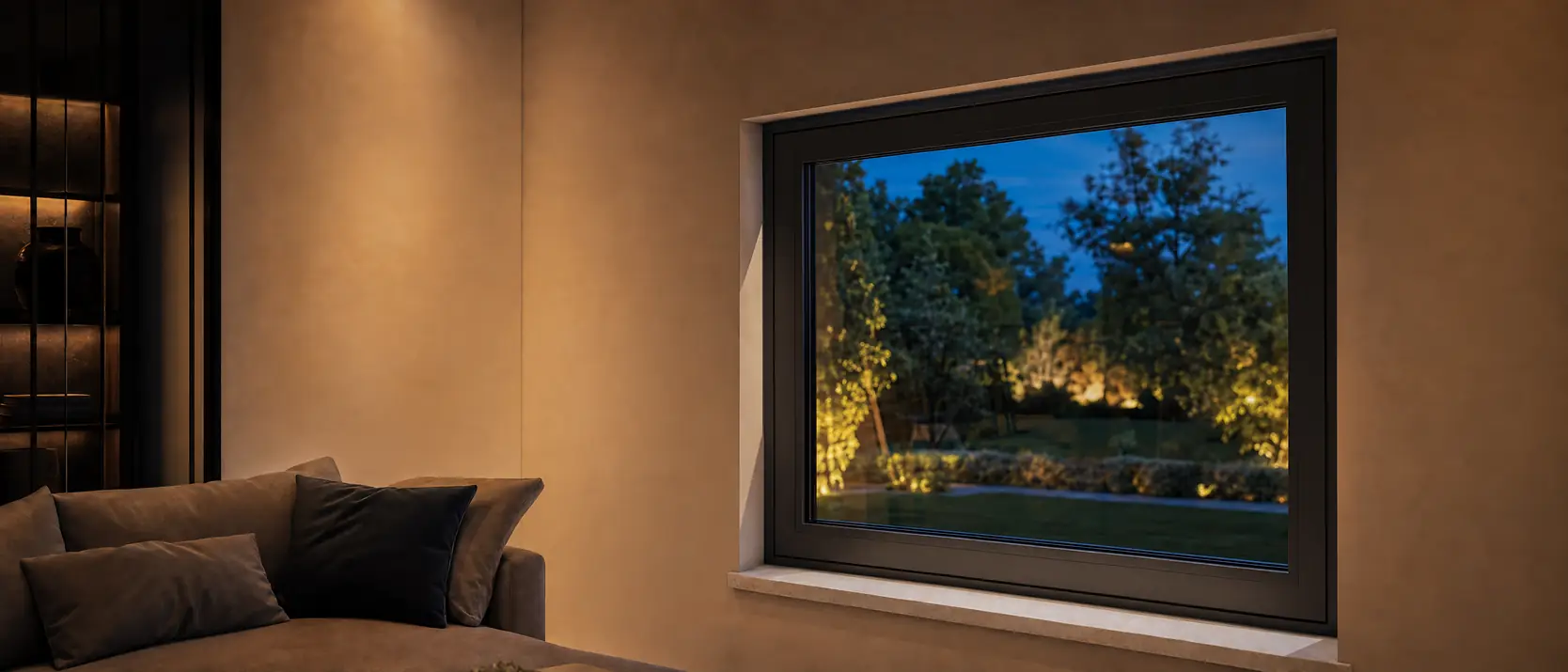
uPVC tilt and turn windows with a 119 mm sightline. On a tilt and turn window every millimetre counts twice, because the outer frame and the sash are both in view — and, like all Continental windows, the sash opens inwards.
Made to measure in uPVC or aluminium, in any RAL colour. Delivery to the UK is quoted with your offer.
What comparable projects cost, by material. This is a guide price from our own quote archive — not a quote and not a final price: the amount for your own sizes, profile, glass and colour is in the quote.
for a unit of 1,000 × 1,400 mm
typically £320 to £448 per unit, excl. UK VAT and import duties The spread is too wide for a single amount; this is the range they fell within. measured on 94 quotes from our own archive
ConfigureThis is a guide price, not a quote and not a final price. The amount for your own sizes is in the made-to-measure quote, which you request through the configurator.
Choose the material and window type and enter the outside size. You see what a window of that size usually cost in our quotes. This is a guide price, not a quote: the real price for your window arrives within three working days in your made-to-measure quote.
In whole pounds, excluding VAT, import duties, delivery and fitting. Worked out with the price per m² of comparable windows in our quote archive; colour, glazing and layout can still move the amount.
Uf, frame depth and sightline come from the profile table. The corner section is the manufacturer's render of exactly this profile: for Aluprof always the same shot — closed corner, close up — and for Gealan the render of the S 9000 NL family. The maximum sash width is on every profile page.
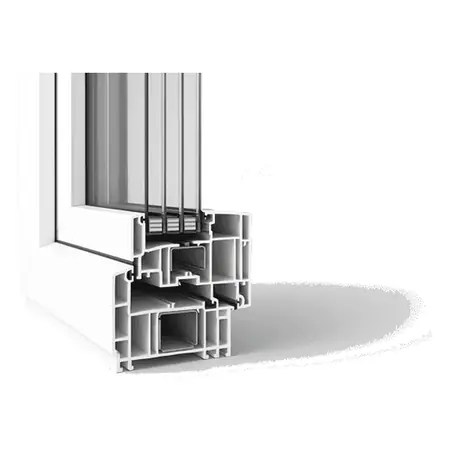
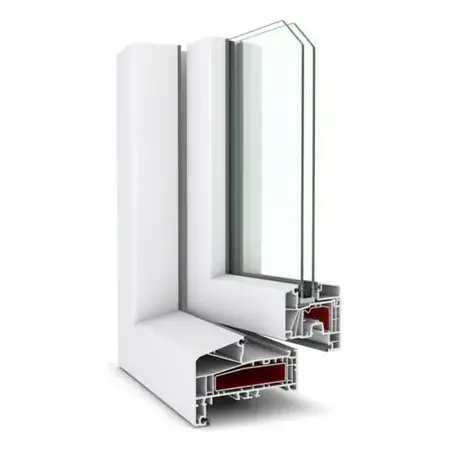
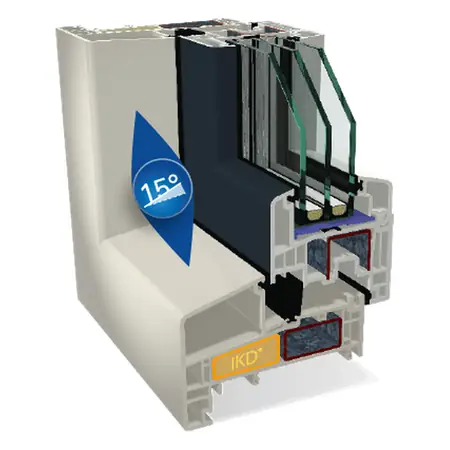
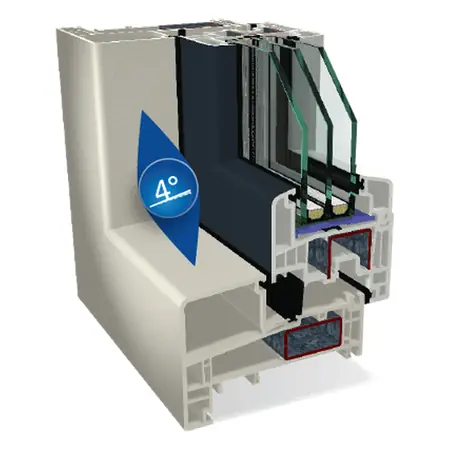
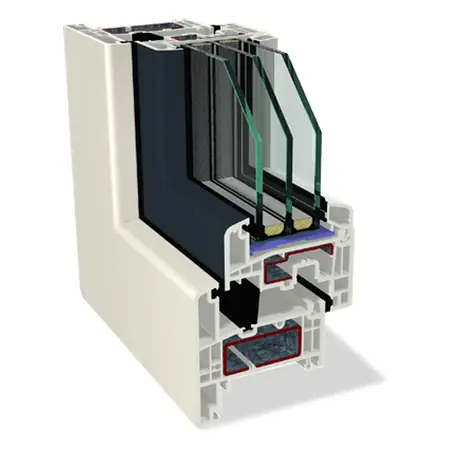
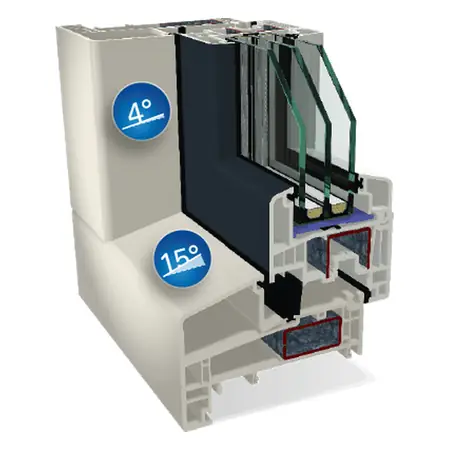
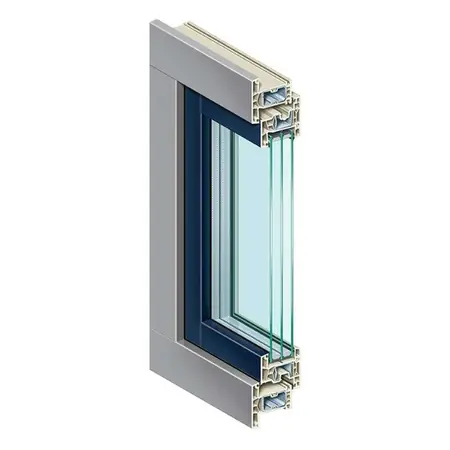
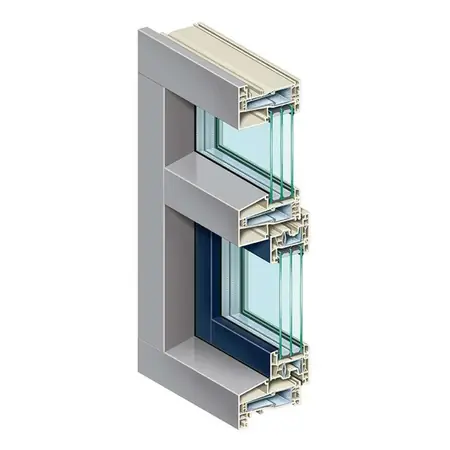
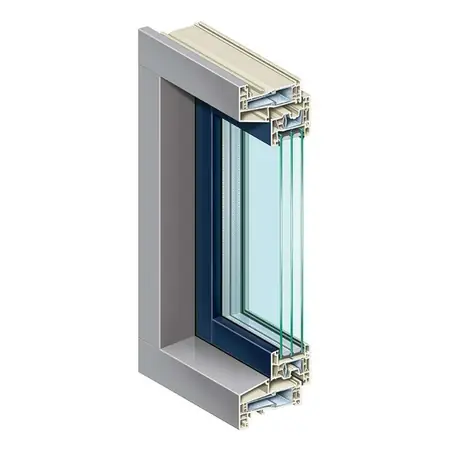
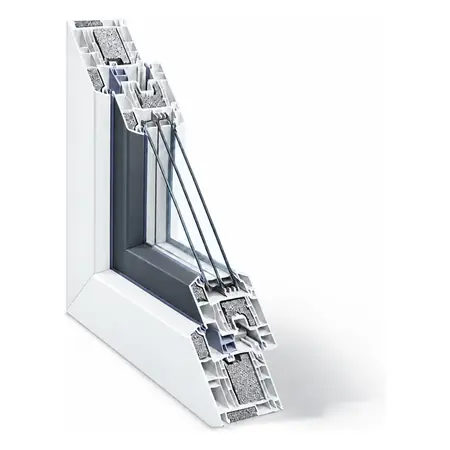
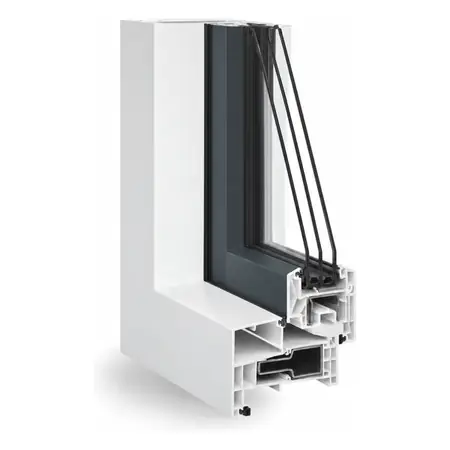
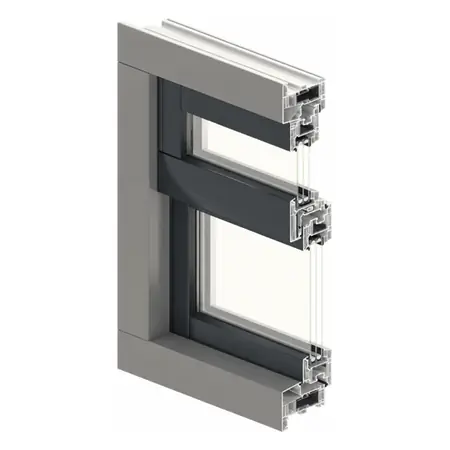
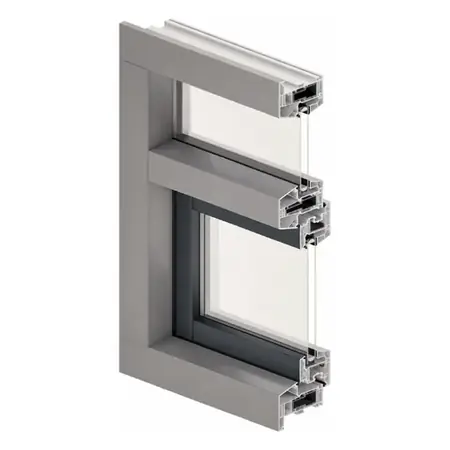
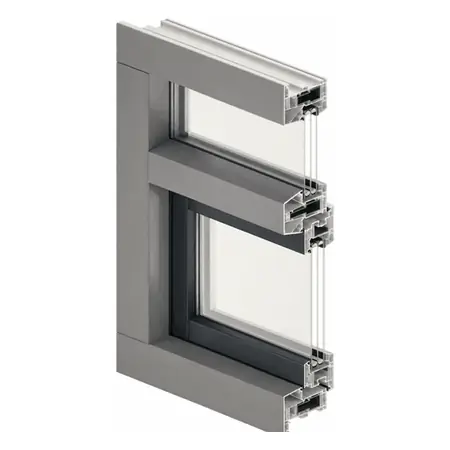
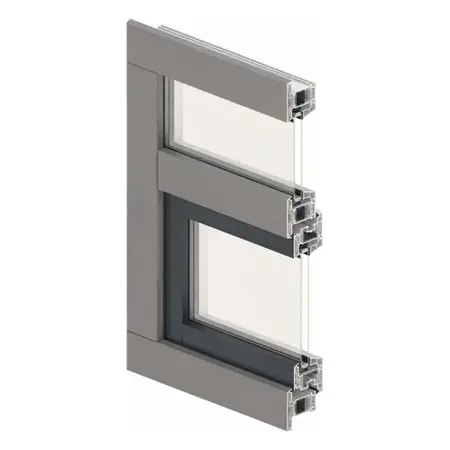
The three uPVC tilt and turn profiles above all sit at Uf 1.10 W/m²K. Within uPVC, then, the insulation value is not a choice. If you want lower, you end up with aluminium: the MB-86N sits at 0.57 and is the best-insulating profile we carry.
The sightline is 119 mm on every uPVC tilt and turn profile we carry. On this window type that counts twice: a tilt and turn already adds a sash frame, so every millimetre the profile is narrower is glass you get back.
The limit is size. Gealan uPVC tilt and turn windows go up to 3,200 × 3,200 mm, and the widest opening sash is 1,400 mm. Go wider than that and you end up with aluminium, which goes to 6,000 × 3,000 mm. Bear in mind too that a wide, tall sash with triple glazing gets heavy; two narrow sashes are then better than one wide one.
Which one, then? Look at the row above; that selection is derived by us and not confirmed by the manufacturer. Gealan S 9000 Base, Haax and Slim are technically the same and differ only in profile shape and frame depth: the Slim is 82.5 mm deep where the other two are 120 mm. So there are more cards than there are decisions. What's left: the sightline (119 mm on all three), the frame depth (82.5 mm on the Slim against 120 mm on the other two), or simply the profile shape you like.
You're already two steps further than where the configurator starts. It first asks what the window is made of and then which profile, and that's exactly what you decide on this page. What it then asks of you is the size and the layout, the glass and the colour. For the size, measure the structural opening at three heights and three widths; the smallest figure is your size. Think about one thing that isn't a measurement: which side the hinges go. A tilt and turn sash turns open to one side, into the room, and that decides whether it clears a cupboard, a curtain or a door that opens next to it.
Two things that belong to the window and not to the profile. In England, Approved Document L asks a replacement window in an existing home for a U-value of 1.4 W/m²K or WER band B, and it can't be worse than the window it replaces. That U-value is for the whole window, not the Uf of the profile quoted above. Replacing windows is also notifiable building work: an installer registered with a competent person scheme, such as FENSA or Certass, notifies it, or you notify building control before the work starts. We supply, we don't install, so this is for your installer to arrange. Scotland and Northern Ireland have their own rules.
On a tilt and turn window seven of the nine choices in step 6 do something, and on uPVC two of them stand out. The first is the locking window handle: the same hardware, but lockable, and the cheapest step you can take towards better security without touching the profile. The second is the insect screen. How much rebate there is for it to sit on depends on the sightline: uPVC runs from 99 to 140 mm, aluminium from 89 to 128 mm. On the narrowest aluminium profile it's therefore tighter than here, which makes the screen a choice here rather than a puzzle. Glazing bars are possible too, but bear in mind that a tilt and turn light already has a sash frame in view — the two lines together soon become too much.
A uPVC tilt window is either a tilt and turn window or a bottom-hung window with us. The tilt and turn has both positions, the bottom-hung only the tilt.
A tilt and turn window always comes with its own frame, as one unit. We don't supply a sash on its own for an existing frame.
No form first: you watch your window take shape as you choose. The price follows in the quote, within three working days.
All three insulate equally: Uf 1.10 W/m²K. Note what that figure is: Uf is the profile, not the window. What you end up with also depends on the glass and on the ratio between profile and glass area — that combination is called Uw, and it comes out of the configurator.
Up to 3,200 × 3,200 mm on the Gealan S 9000 NL, with an opening sash up to 1,400 mm wide. That sash width is the real limit: the pivot point has to carry the weight. For the other uPVC ranges no maximum has been set yet — if you're close to a limit, ask.
With the question of which dimension ties your hands. If it's the frame depth, take the Gealan S 9000 Slim (82.5 mm). There's nothing to choose on insulation here: all three sit at Uf 1.10. If it's the glass area, the Gealan S 9000 with its 119 mm sightline. If none of the three ties you, choose on profile shape and any card in the row will do.
The structural opening in width and height, each in three places. Also note the opening direction — which side the hinges go — and the frame depth: uPVC tilt and turn profiles run from 82.5 to 120 mm, and that makes almost four centimetres' difference in how far the frame sits into the room.
That question isn't about the profile. A security class such as RC2 (EN 1627) is a property of the complete element: profile, glass, hardware and the way it is fixed. An element tested as RC2 but fitted badly is no longer an RC2 element. We don't list an RC class per profile, because we haven't had one tested. If your project has a security requirement, check it with your installer before you order.
Because it's the cheapest step you can take towards better security. The handle is on the inside; someone who breaks the glass to reach it still can't turn the sash open without the key. It doesn't turn an ordinary window into a burglar-resistant element — that depends on frame, sash, hardware and fixing together — but it does remove the easiest way in.
No, we always supply the window with a new frame. The old frame comes out and the new unit takes its place.
Where we have a guide price, it is on the page, not behind a form — not a quote and not a final price; the amount for your sizes is in the made-to-measure quote.
Request my quote