Tilt and turn window with top light, made to measure
A standard tilt and turn window below, at a height you can operate, and a fixed pane above that fills the rest of a tall opening.
Standard size 1,200 × 1,800 mm
Configure this tilt and turn window with top lightHow much does a tilt and turn window with top light cost?
What comparable projects cost, by material
typically £320 to £448 per unit, excl. UK VAT and import duties The spread is too wide for a single amount; this is the range they fell within. measured on 94 quotes from our own archive
Configure in uPVCtypically £526 to £780 per unit, excl. UK VAT and import duties The spread is too wide for a single amount; this is the range they fell within. measured on 38 quotes from our own archive
Configure in aluminiumThis is a guide price, not a quote and not a final price. The amount for your own sizes is in the made-to-measure quote, which you request through the configurator.
What you need to know about a tilt and turn window with top light
| Standard size of this layout | 1,200 × 1,800 mm |
|---|---|
| Sections in this layout | Fixed glass, Tilt and turn |
| Profiles | 21 profiles, each with its own page |
| Material | uPVC · Aluminium |
| Delivery quoted with your offer | supplied, not installed |
Some openings are taller than is comfortable for a tilt and turn window on its own — under a sloping roof, or in an elevation where the head of the window sits higher than you can still reach the handle comfortably. This window puts the tilt and turn sash at reachable height at the bottom and fills the rest of the height with a fixed pane above, so you get glass over the full height without a sash you can't operate.
The standard size is 1,200 × 1,800 mm, with the fixed top light taking a quarter of the height and the tilt and turn window the rest. If you do need ventilation at that height, the tilt and turn window with tilt-in top light — with a bottom-hung sash instead of the fixed top light — is the form that provides for it.
This is one of the few layouts where the reason for the split isn't ventilation but reach: the tilt and turn window stays at the height where an average person can get to the handle without a step, and the top light simply fills the rest of an opening that is too tall for it. That makes it a good fit under a sloping roof structure, or in an elevation where the head of the window sits higher than is comfortable for a single tilt and turn pane.
Compared with the fixed window with top light and the fixed window with tilt-in top light — the other two windows with the same split — this is the only one where the LOWER pane moves instead of the upper one. That is a deliberate reversal: in this window it is the lower part that has to do the ordinary job of a window (cleaning, opening fully), and the top light is there purely for height.
For this layout, measure the full height of the opening in one go; the configurator handles the split between the tilt and turn pane below and the fixed top light as soon as you enter that height, always with the tilt and turn pane at operable height at the bottom. If the opening is under a sloping roof, check with us beforehand whether the rectangular shape of this window fits your roof slope — a raked top edge is not a standard part of this layout.
Maintenance is limited to the tilt and turn pane below; the fixed top light needs nothing. Colour and finish follow the same chart as any other pane, and because the top light draws less attention at eye level than the tilt and turn pane below it, most people choose the same colour over the full height rather than a separate accent on the upper part.
In a renovation under an existing sloping roof, this is often the only layout that fits without altering the roof structure: the tilt and turn pane stays at operable height and the top light fills the rest. In a new build this height is often fixed early in the design of the roof structure, so window and roof meet properly first time.
For break-in resistance, the tilt and turn pane below is the point to watch; the fixed top light has no hardware and often sits too high to be an attractive target anyway. For a ground-floor window, ask about a stronger locking cylinder on the tilt and turn pane.
In the fixed top light you can use the heaviest glass with no consequences for hardware; in the tilt and turn pane below, weight counts for the hardware. The configurator checks this per pane as soon as you enter the size and the glass.
Still not sure? Use the comparison with the other layouts in this group above to see which arrangement suits your situation best.
From measuring to delivery in four steps
- 1
Configure
Choose type, profile, size, glass and colour in the configurator. You see your window in the drawing straight away.
- 2
Quote within 3 working days
We ask the manufacturer for the price and send you a quote for your sizes.
- 3
Accept
Once you accept, your window goes into production. You pay after accepting, by invoice.
- 4
Delivery
Delivery to the UK is quoted with your offer. You fit it yourself or with your own installer.
Tilt and turn window with top light in 21 profiles
Each profile has its own page with the specifications, the colours and the maximum sizes. Choose it there and the profile is already selected in the configurator.
Know what you want? Put it together.
No form first: you watch your window take shape as you choose. The price follows in the quote, within three working days.
Other configurations in this group
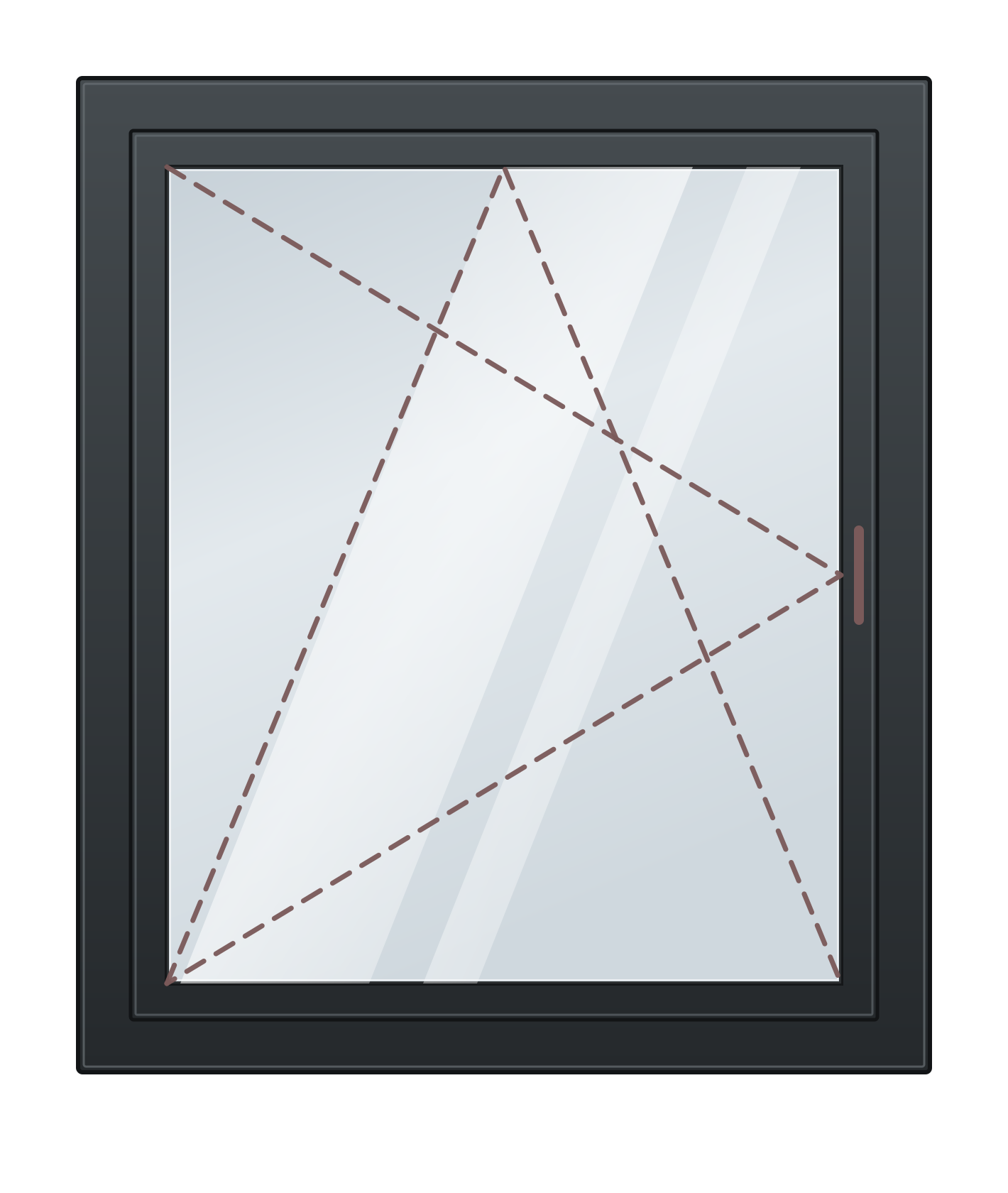
Tilt for air, turn to clean — the window most of our layouts start from.
Request my quote
One pane of glass, no hinge — the cheapest way to get light in without ventilation.
Request my quote
Looks like a tilt and turn window, doesn't open — for an elevation with one consistent look.
Request my quote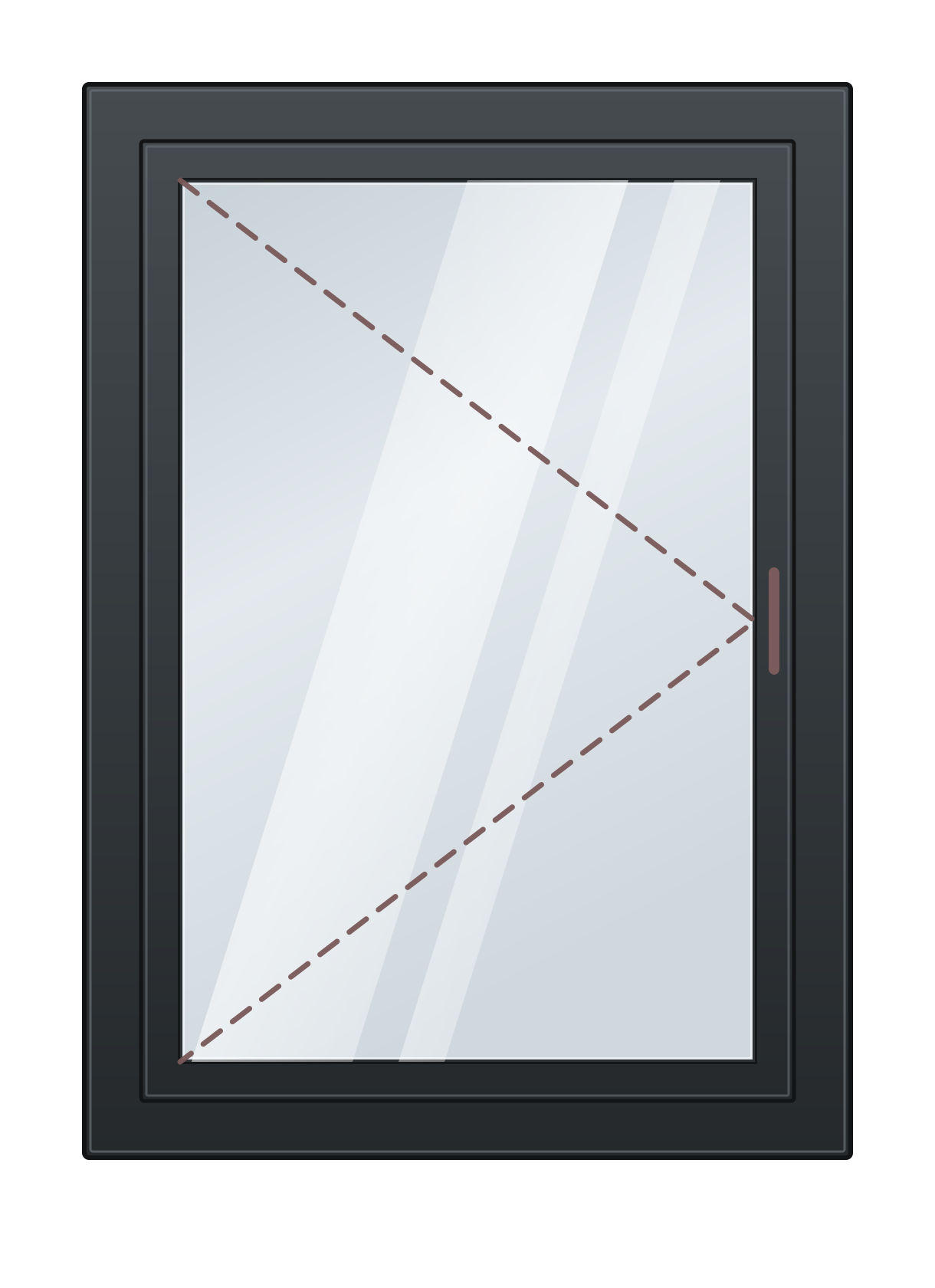
Opens fully inward for air and for cleaning — without the tilt position.
Request my quote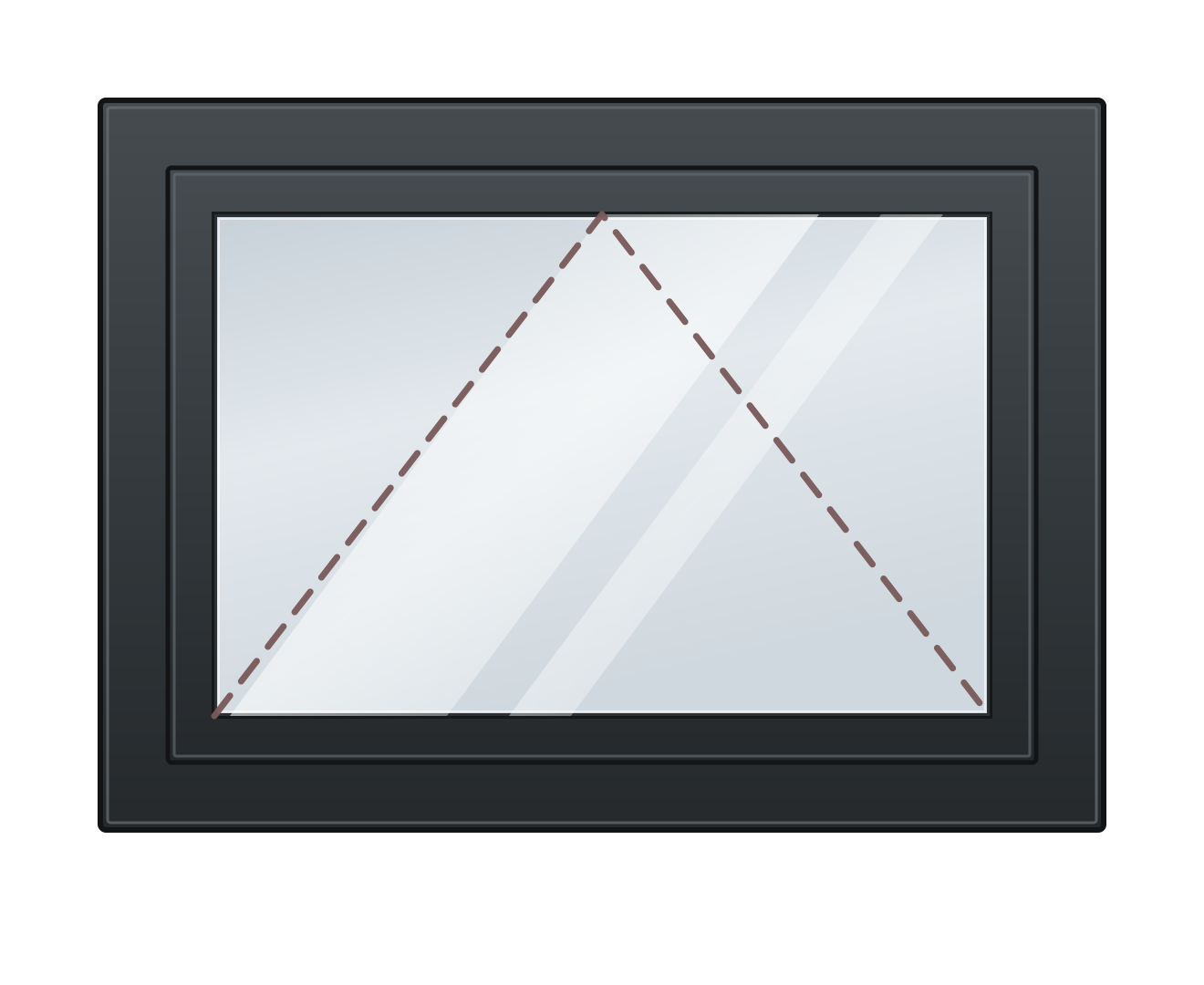
Hinged at the bottom, tilts inward — ventilation in a spot you don't reach with a handle.
Request my quote
Two fixed panes one above the other — light in a narrow, tall strip, with no opening.
Request my quoteFrequently asked questions about a tilt and turn window with top light
Why not one tall tilt and turn window instead of this one?
A tilt and turn window that runs above reaching height is awkward to operate at the top and heavier to turn. This window keeps the part you operate at reachable height and fills the rest with fixed glass.
Can the top light be a tilt-in sash instead?
Yes, that is a different layout: the tilt and turn window with tilt-in top light has the same split with a bottom-hung sash instead of the fixed top light.
How tall can the opening be with this window?
The standard size is 1,800 mm; in the configurator you set a greater height if your opening needs it. The tilt and turn pane then stays at reachable height, and the top light gets taller to take up the difference.
Can the top light be a different colour from the tilt and turn window?
That depends on the profile and on what the configurator allows for that combination of panes. Ask once you have chosen a profile.
Configure this tilt and turn window with top light
Where we have a guide price, it is on the page, not behind a form — not a quote and not a final price; the amount for your sizes is in the made-to-measure quote.
Request my quote